
About This Podcast
Produced by Net Zero Compare
Interviews + explainers for the energy transition, without the greenwash. Hear from innovators across climate tech and sustainability (battery chemists, hydrogen founders, marine energy, EV charging, carbon markets), then get buyer’s-guide clarity on tools like carbon accounting, ESG monitoring and supply-chain solutions. Straight facts, business outcomes, real-world adoption.
Why Listen
- Practical, market-aware conversations that translate policy + technology into actions for teams.
- Broad yet targeted coverage across the energy transition - one feed to stay literate on multiple verticals.
- Vendor-agnostic comparisons that help you evaluate solutions before you commit budget.
- Agenda-free tone: useful whether you’re here for compliance, customers, or personal mission.
Episodes
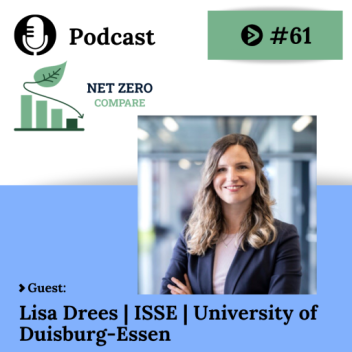
Lisa Drees on Building Trust in Green Hydrogen Supply Chains: Technology Is Only Part of the Answer
Ep. 61
·
Oct 15, 2026
44:03
In a Net Zero Compare interview, Dr. Lisa Drees explores how trust shapes global green hydrogen supply chains. Digital traceability, certificates and blockchain can help companies share and protect sustainability information, but they cannot guarantee accurate inputs or replace credible suppliers, verification and business relationships. Effective systems require common standards, comparable emissions calculations and governance that balances transparency with commercial confidentiality. Infrastructure gaps, uncertain demand and shifting policy and funding also constrain progress: digital tools may be ready before the markets they serve. For buyers, the priority is to assess environmental evidence, supplier experience and contractual risk alongside certification. Building trustworthy hydrogen markets requires technology, infrastructure, regulation and cooperation to develop together.
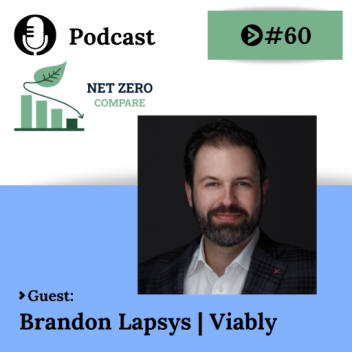
Brandon Lapsys on Why Recycling Projects Depend on End Markets, Operational Discipline, and Better Waste Data
Ep. 60
·
Oct 8, 2026
40:08
Brandon Lapsys, President of Viably, discusses the operational and economic factors that determine whether waste-processing and recycling systems succeed. He explains why projects should begin with viable end markets for recovered materials and account for transportation, labor, contamination, maintenance, and future operating conditions. The conversation explores automation in construction-and-demolition recycling, food-waste contamination, equipment selection, and the importance of training and technical support. Lapsys also examines how AI and better data can improve performance when linked to clear operational goals. For sustainability and ESG teams, he emphasizes understanding how waste figures are measured, where materials go after collection, and whether recovered outputs have practical value. Tightening landfill capacity and rising transportation costs could encourage further investment in recycling infrastructure across North America.
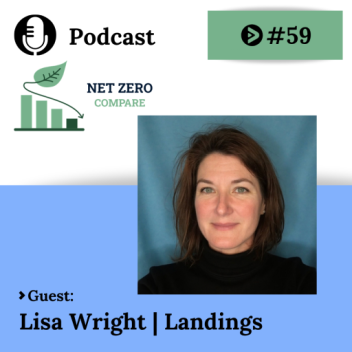
Lisa Wright on Why eVTOL Infrastructure May Matter as Much as the Aircraft
Ep. 59
·
Oct 2, 2026
40:45
This episode of Net Zero Compare features Lisa Wright, Founder and CEO of Landings, discussing the infrastructure needed to make electric aviation commercially viable. The conversation explores how eVTOL networks depend not only on aircraft, but also on suitable landing sites, grid capacity, charging systems, battery cooling, permitting, and community support. Wright explains Landings’ focus on lower-cost regional vertiports, shared charging infrastructure, and the use of solar and battery storage where grid access is limited. She also discusses potential early applications in medical transport, emergency response, and logistics, as well as the environmental trade-offs of electric aviation. The episode highlights why connected regional networks, rather than isolated vertiports, will be critical to scaling the sector.
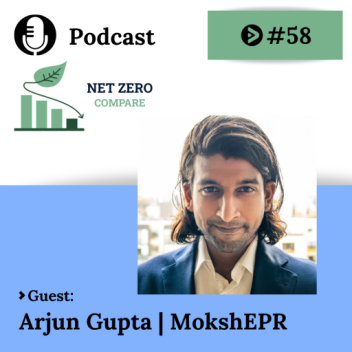
Arjun Gupta on Packaging EPR in the US: How AI Is Changing Compliance, Data Management, and Cost Forecasting
Ep. 58
·
Sep 24, 2026
01:16:01
Arjun Gupta, Founder and CEO of MokshEPR, joins Net Zero Compare to discuss how packaging Extended Producer Responsibility (EPR) is changing compliance for companies selling packaged goods in the United States. He explains why state-by-state rules, detailed packaging classifications, and incomplete product data are creating significant operational challenges. The conversation explores how AI can help companies clean and structure packaging data, pre-fill classifications, support reporting, forecast EPR fees, and assess packaging alternatives, while keeping human review and traceability at the center of compliance. Arjun also discusses the financial impact of packaging decisions, the importance of cross-functional collaboration, and why reliable packaging data can support broader decisions around procurement, logistics, waste reduction, and packaging redesign.

Lubomila Jordanova on Corporate Sustainability: From Carbon Accounting to Business Value
Ep. 57
·
Sep 17, 2026
46:19
Lubomila Jordanova, founder of Plan A and co-founder of the Greentech Alliance, discusses the practical challenges of corporate decarbonization, including carbon accounting, Scope 3 emissions, supplier engagement, sustainability regulation, and climate technology. She explains why reliable emissions data remains difficult to collect and why companies need to improve sustainability knowledge across procurement, finance, operations, and product teams. The conversation also explores how businesses can prepare suppliers for reporting requirements, distinguish compliance obligations from commercial opportunities, and evaluate sustainability technologies based on demonstrated results and real-world implementation. Jordanova also reflects on the growing consolidation of sustainability software and why integrated platforms may help companies manage carbon accounting, ESG reporting, supply-chain assessments, and other related requirements more effectively.

Hesham Gamal Gaafar on Digital Twins in Smart Cities and Infrastructure: Where the Real Value Comes From
Ep. 56
·
Sep 10, 2026
52:10
Hesham Gamal Gaafar, Manager of Digital Twin, Smart Cities and AEC at Esri Saudi Arabia, explains how digital twins differ from BIM and GIS and where they can create practical value. He discusses operational efficiency, sustainability, BIM-GIS integration, interoperability, data governance, AI applications, predictive maintenance, and why organizations should define business needs before investing in technology.
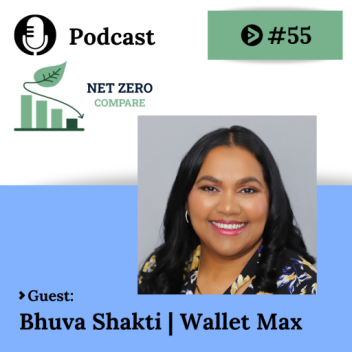
Bhuva Shakti on What Makes a Climate Company Investable, and Where AI Actually Helps
Ep. 55
·
Sep 3, 2026
01:11:33
Climate companies become investable when environmental impact is backed by strong fundamentals, including scalable business models, sound unit economics, capable teams, measurable results, and realistic market strategies. AI can improve sustainability reporting, due diligence, regulatory monitoring, and supply chain analysis, but its value depends on reliable data, transparency, and human oversight. High-risk decisions still require clear accountability and judgment.
inclui quem fala
Bhuva Shakti, AI adoption and automation advisor and founder of Bhuva’s Impact Global and Wallet Max, explains what makes climate companies investable and where AI can genuinely support sustainability. She highlights the importance of scalable business models, sound unit economics, measurable impact, reliable data, and capable teams. AI can improve reporting, due diligence, regulatory monitoring, and supply chain analysis, but high-risk decisions still require human judgment, transparency, and clear accountability.
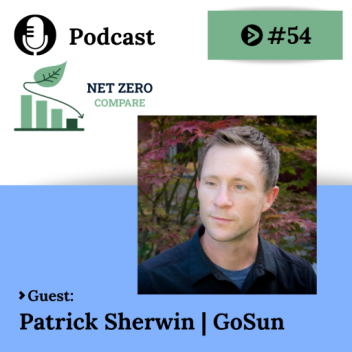
Patrick Sherwin on What Makes Clean Energy Technology Work in the Real World
Ep. 54
·
Aug 27, 2026
32:09
Patrick Sherwin, founder and CEO of GoSun, explains why clean-energy technologies must deliver more than emissions reductions. Drawing on decades of experience with solar and distributed energy, he discusses solar economics, EV charging, resilience, manufacturing, efficiency, and product design, emphasizing that reliability, usability, realistic costs, and strong implementation ultimately determine whether climate technologies succeed.
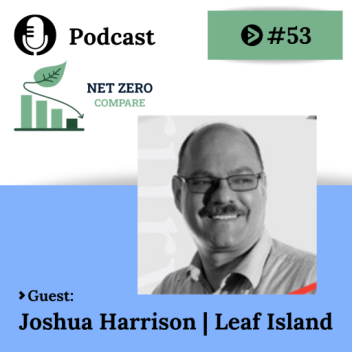
Josh Harrison on Why Climate Adaptation Requires Connected Solutions for Forests, Buildings, and Cities
Ep. 53
·
Aug 20, 2026
01:34:08
Josh Harrison, Director of the Center for the Study of the Force Majeure at UC Santa Cruz, argues that climate adaptation requires systems thinking. Wildfire resilience depends on ecological forest restoration, viable uses for removed wood, local processing capacity, and long-term management. Mass timber can support lower-carbon construction, but only with responsible sourcing and traceability. In cities, green roofs, vegetation, stormwater systems and other nature-based infrastructure can reduce heat, flooding and energy demand, although permitting, financing and fragmented benefits remain major barriers to wider adoption.
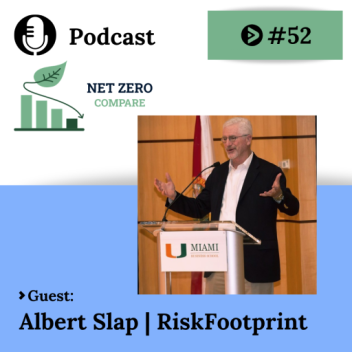
Albert Slap on Why Property Climate Risk Requires More Than a Hazard Score
Ep. 52
·
Aug 13, 2026
01:45:18
In this Net Zero Compare podcast, Albert Slap, President of RiskFootprint, explains why physical climate risk should be treated as a practical property, financial, and operational issue, not just an ESG reporting concern. Traditional due diligence and flood-zone maps can miss important hazards, while single risk scores may hide severe exposures. Slap argues for property-level assessments that consider building vulnerability, potential damage, financial loss, and downtime. He highlights the ASTM Property Resilience Assessment as a framework for identifying hazards, evaluating vulnerabilities, and selecting cost-effective resilience measures. For large portfolios, companies should screen assets, prioritize strategically important high-risk properties and target investment accordingly. Resilience can reduce repair costs, business interruption, and recovery time, while supporting insurance, financing, and asset value decisions. The key message: climate data becomes valuable only when it leads to practical action at the asset level.
-
«Previous
Showing results
1
to 10
of 61
Topics
Similar Podcasts

Net Zero Compare Community Voices
Net Zero Compare
Active
Irregular
Our show
Promoted
The Energy Gang
Wood Mackenzie
Active
Twice a week
Our show

Outrage + Optimism
Global Optimism
Active
Weekly
Our show
The Zero Podcast
Bloomberg
Active
Weekly
Our show

Resources Radio
Resources for the Future (RFF)
Active
Weekly
Our show

People Places Planet
Environmental Law Institute (ELI)
Active
Monthly
Our show
Added on Oct 14, 2025 by Amadeusz Annissimo
·