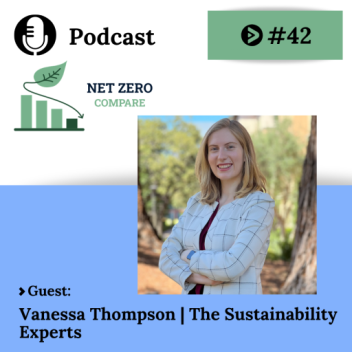
#42: Vanessa Thompson on ESG as an Innovation Strategy: Vanessa Thompson on Moving Beyond Compliance
In this episode
Executive summary
Vanessa Thompson, Managing Director of The Sustainability Experts, joined Net Zero Compare to discuss how organizations can move from sustainability commitments to effective ESG execution. She emphasized that sustainability should be integrated into core business strategy rather than treated as a compliance exercise or standalone technology investment. The discussion covered ESG implementation, Scope 3 emissions, supplier engagement, sustainability reporting frameworks such as CSRD, GRI, and SASB, and the role of sustainability in driving innovation and business value. Thompson highlighted the importance of breaking down organizational silos, improving data quality, aligning sustainability initiatives with departmental goals, and building stronger supplier partnerships. She also explored how companies can use sustainability to create new revenue opportunities, improve operational efficiency, strengthen resilience, and generate measurable returns. The conversation offered practical insights for organizations seeking to embed sustainability into long-term business success.
Managing Director Vanessa Thompson of The Sustainability Experts joined Net Zero Compare to discuss one of the biggest challenges companies face today: turning sustainability goals into practical business execution.
The conversation focused on ESG implementation, Scope 3 emissions, supplier engagement, sustainability reporting, and the growing pressure created by frameworks such as CSRD. Rather than treating ESG purely as a compliance exercise, Thompson argued that organizations should approach sustainability as a long-term innovation and operational strategy.
Hosted by Net Zero Compare, the discussion explored how companies can connect sustainability initiatives with revenue generation, operational resilience, and organizational alignment.
🎥 Watch the Full Conversation: The full conversation with Vanessa Thompson is available below via YouTube. In the discussion, Thompson explains why many ESG initiatives fail after the planning stage, how companies can improve supplier engagement around Scope 3 emissions, and why sustainability should be viewed as a business model opportunity rather than only a regulatory obligation. The conversation also covers practical examples from companies including Interface, UC Santa Cruz, and Barry Callebaut, along with broader observations about ESG reporting, innovation, and organizational silos. Readers interested in ESG implementation, sustainability operations, or emissions reporting may find additional nuance and practical context in the full recording.
Why Companies Struggle With Sustainability Implementation
According to Thompson, one of the most common mistakes companies make is treating sustainability as a standalone technology investment rather than an organizational shift. Many organizations approach ESG by purchasing external solutions such as solar panels, biofuels, or sustainability software without evaluating how sustainability aligns with the company’s existing strengths, operations, and business model.
Thompson argued that sustainability initiatives create the most value when they are connected to core business competencies. Instead of viewing ESG as an isolated compliance requirement, companies should evaluate how sustainability can improve efficiency, reduce waste, strengthen stakeholder relationships, and create operational advantages.
She repeatedly emphasized that sustainability is fundamentally tied to efficiency. Reducing water use, energy consumption, and operational waste can directly improve financial performance while also supporting broader environmental goals.
The discussion also highlighted a broader issue many organizations face once high-level commitments are announced. While sustainability targets are often relatively easy to communicate publicly, implementation becomes difficult because organizations underestimate the coordination required across departments and business units.
The “Diplomat” Approach to ESG Execution
One of the central themes of the conversation was Thompson’s view that sustainability professionals must act as internal diplomats. Referencing former Disney sustainability executive Dr. Beth Stevens, Thompson explained that successful ESG implementation depends heavily on understanding incentives across the organization. Finance teams, HR departments, procurement groups, operations managers, and executives all have different priorities and pressures.
Rather than pushing sustainability initiatives in isolation, Thompson suggested that organizations should first map the challenges each department faces and then identify how sustainability initiatives can support those existing goals.
For example:
Sustainability projects may reduce costs for finance teams
Employee engagement initiatives may support HR objectives
Operational efficiencies may improve customer experience
Supply chain initiatives may reduce procurement risks
This approach shifts ESG from being perceived as an external requirement to becoming a practical business tool that helps different parts of the organization achieve their own objectives.
The discussion also reinforced a recurring issue raised by many ESG consultants and sustainability teams: organizational silos. Thompson argued that disconnected departments often prevent companies from building reliable sustainability programs because data, priorities, and workflows remain fragmented.
ESG Reporting Is Becoming a Business Requirement
The conversation also addressed ESG reporting frameworks, such as:
CSRD (Corporate Sustainability Reporting Directive)
GRI (Global Reporting Initiative)
SASB (Sustainability Accounting Standards Board)
Thompson argued that ESG reporting is increasingly necessary not only because of regulation, but also because investors and financial stakeholders now expect transparency around sustainability metrics and external impacts.
She noted that sustainability topics are now commonly discussed during quarterly reporting calls and investor communications, including:
carbon reduction targets
diversity and inclusion initiatives
supply chain risks
emissions disclosures
However, Thompson also warned against confusing ESG reporting with operational sustainability performance itself. In her view, reporting frameworks help organizations communicate progress and attract investor interest, but long-term value creation comes from identifying ways sustainability initiatives can improve margins, generate revenue, reduce costs, or create operational resilience.
Sustainability as a Revenue Opportunity
One of the more notable themes throughout the conversation was the idea that sustainability initiatives can create entirely new revenue streams. Thompson discussed several examples where companies used sustainability challenges as opportunities for innovation rather than treating them solely as compliance obligations.
Prometheus Fuels
One example involved Prometheus Fuels, a company working on technology that captures atmospheric carbon dioxide and converts it into fuel. Thompson used this example to illustrate how environmental problems can potentially become sources of economic value rather than only operational burdens.
Barry Callebaut
Thompson also discussed Barry Callebaut and its efforts to integrate forest farming practices into cacao production. According to Thompson, these initiatives improved biodiversity and crop resilience while also creating an opportunity to generate carbon credits that could be sold externally.
In both examples, sustainability initiatives evolved beyond risk management and became part of broader business strategy and value creation.
Why Scope 3 Emissions Remain So Difficult
The conversation also focused heavily on Scope 3 emissions, which Thompson described as one of the most difficult aspects of ESG reporting and emissions accounting. While companies increasingly have access to internal operational data related to facilities, energy use, and employee activity, supply chain emissions remain significantly harder to measure accurately.
The primary issue is that Scope 3 calculations often depend on assumptions and incomplete supplier data. Organizations may need to estimate emissions from vendors, transportation providers, manufacturers, and upstream suppliers without having direct visibility into their operations.
Thompson argued that solving this challenge requires more than better software or reporting tools. Instead, companies need stronger supplier relationships and greater supplier engagement around sustainability goals. She framed this again through the “diplomat” mindset, suggesting companies should work collaboratively with suppliers rather than approaching them only as reporting obligations.
Supplier Engagement and Long-Term Partnerships
Supplier engagement emerged as another major theme throughout the discussion. Thompson argued that organizations seeking sustainable supply chains should prioritize vendors aligned with similar missions and long-term sustainability goals.
One example discussed was Interface, the flooring manufacturer known for its sustainability transformation. According to Thompson, Interface originally relied heavily on fossil-fuel-based materials but later made a strategic decision to work with smaller, more sustainability-focused suppliers willing to innovate alongside the company. This collaboration ultimately contributed to the development of recycled plastic technologies later adopted across the broader fashion and manufacturing industries, including by companies such as Adidas and Gucci.
The example illustrated a broader point made throughout the conversation: companies sometimes gain competitive advantages by partnering with smaller, more flexible suppliers that are willing to innovate and align strategically around sustainability goals.
Data Quality Matters More Than ESG Software Alone
The discussion also touched on the growing number of ESG software platforms now entering the market. While Thompson acknowledged that many strong sustainability software solutions exist, she argued that software alone cannot solve ESG challenges if organizations lack reliable internal processes and clean data infrastructure.
According to Thompson:
Poor interdepartmental communication creates fragmented data
Organizational silos reduce reporting accuracy
Inconsistent processes weaken sustainability reporting
Weak data foundations limit the usefulness of ESG software
She stressed that organizations must first improve internal coordination and data governance before expecting meaningful results from sustainability technology platforms.
Regulatory Pressure Can Also Create Competitive Advantages
When discussing regulations such as CSRD, Thompson encouraged companies to think beyond basic compliance. Rather than asking only how to satisfy new reporting obligations, she suggested organizations should identify where regulatory shifts may create opportunities for differentiation, new services, or new business models.
For example, companies that move early on sustainability compliance may later:
support peers within their industry
build new consulting capabilities
create specialized products or services
attract sustainability-focused customers
strengthen investor relationships
In Thompson’s view, the organizations that benefit most from sustainability regulations will likely be those that use them strategically rather than treating them only as operational burdens.
Measuring the ROI of Sustainability
Another major focus of the conversation was ROI measurement. Thompson emphasized that sustainability ROI should not be evaluated from a single perspective. Different departments may experience different forms of value creation from the same initiative.
Examples discussed included:
improved employee retention and engagement
stronger investor interest
lower operational costs
improved supplier stability
reduced long-term supply chain risk
higher organizational resilience
Rather than creating entirely separate measurement systems, Thompson suggested companies should connect sustainability initiatives directly to existing KPIs already used across departments. This approach can make ESG programs easier to justify internally because teams are evaluating sustainability through metrics they already understand and track.
Starting Small May Be the Most Practical Approach
Toward the end of the discussion, Thompson acknowledged that sustainability implementation can feel overwhelming for organizations at early stages. Her recommendation was straightforward: start with one manageable initiative, demonstrate success, and build momentum gradually.
According to Thompson, many successful sustainability leaders initially faced the same uncertainty around implementation, organizational buy-in, and resource allocation. Smaller pilot projects can help companies gain internal support, improve stakeholder confidence, demonstrate measurable value, identify operational challenges early, and create momentum for larger initiatives.
Final Thoughts
Throughout the conversation, Vanessa Thompson consistently framed sustainability as more than a reporting exercise or regulatory obligation. Her central argument was that ESG initiatives become significantly more effective when organizations connect them directly to operational strategy, innovation, supplier relationships, and long-term business resilience.
The discussion also reinforced several recurring themes increasingly visible across the sustainability sector. Scope 3 emissions remain highly complex, supplier engagement is becoming increasingly important, and data quality often presents a bigger challenge than software availability itself. Thompson also highlighted that organizational silos continue to slow ESG implementation efforts, while companies increasingly need to connect sustainability programs with measurable business outcomes and operational value.
For organizations navigating ESG reporting, sustainability implementation, or climate-related regulation, the conversation offered a practical reminder that sustainability efforts tend to scale more successfully when they are tied to clear operational value and internal alignment rather than treated purely as compliance requirements.
Topics
More from Net Zero Compare Podcast

#56: Hesham Gamal Gaafar on Digital Twins in Smart Cities and Infrastructure: Where the Real Value Comes From
#55: Bhuva Shakti on What Makes a Climate Company Investable, and Where AI Actually Helps

#54: Patrick Sherwin on What Makes Clean Energy Technology Work in the Real World

#53: Josh Harrison on Why Climate Adaptation Requires Connected Solutions for Forests, Buildings, and Cities
#52: Albert Slap on Why Property Climate Risk Requires More Than a Hazard Score