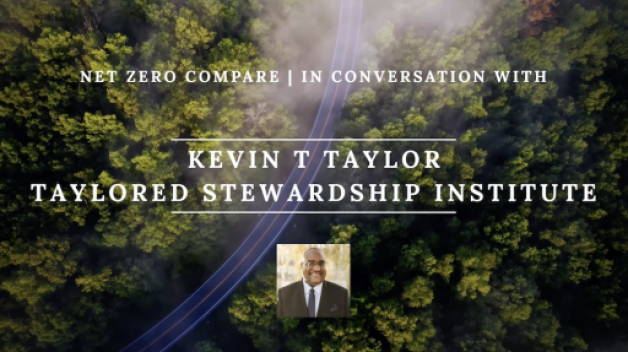
#40: Kevin T. Taylor on What Climate Startups Need Beyond Funding: Lessons from Kevin T. Taylor’s Work at Greentown Labs
In this episode
Executive summary
Kevin T. Taylor’s experience at Greentown Labs highlights that climate startups need far more than funding to succeed. In the podcast, Taylor explains how shared infrastructure, prototyping tools, investor access, mentorship, and strong professional networks can significantly improve a startup’s chances of scaling. He emphasizes that climate innovation depends on ecosystems where founders can reduce costs, test ideas, learn from peers, and connect with corporate partners and investors. The discussion also explores leadership, governance, and operational discipline within mission-driven organizations. Taylor reflects on managing organizational transitions, succession planning, financial sustainability, and the importance of clear decision-making structures as companies grow. He argues that strong internal systems, leadership development, and documented decision processes are essential for long-term resilience. Another major theme is inclusion within climate innovation. Taylor stresses that women founders and underserved communities often face unequal access to capital and networks, despite bringing valuable perspectives and solutions. Overall, the conversation presents climate innovation as not only a technology challenge, but also a leadership, governance, and ecosystem design challenge.
What Climate Startups Need Beyond Funding: Lessons from Kevin T. Taylor’s Work at Greentown Labs
Introduction
Climate technology is often discussed through new products, venture capital, and policy support. Those factors matter, but they do not tell the full story. Behind every promising climate startup is a more practical question: what kind of environment allows early-stage ideas to become market-ready solutions?
That question was central to a recent Net Zero Compare conversation with Kevin T. Taylor, former Chief Financial Officer and Interim CEO of Greentown Labs, North America’s largest climatetech incubator. During his time there, Taylor worked closely with startups, funders, investors, board members, and internal teams during a period of organizational transition.
Today, through the Taylored Stewardship Institute, he focuses on helping institutional leaders make responsible long-term decisions. His experience at Greentown Labs offers useful lessons for climate startups, investors, sustainability teams, and business leaders trying to build durable organizations in a fast-changing market.
🎥 Watch the Full Conversation: The full interview with Kevin T. Taylor explores how climate innovation ecosystems work behind the scenes, from shared prototyping infrastructure to capital access, governance, and leadership during transition. Readers can watch the full recording below to hear the discussion in more detail. The conversation adds useful context for anyone working with climate startups, sustainability-focused organizations, or companies trying to make better long-term decisions.
Climate Startups Need an Ecosystem, Not Just Office Space
Greentown Labs was created to give people working on climate-related solutions a place to come together, reduce operating costs, learn from each other, and build companies in a shared environment. Taylor described it as more than a physical location. It was a community designed to help startups access tools, expertise, networks, and practical support they may not otherwise have been able to afford in the early stages.
This matters because many climate startups require more than a desk and an internet connection. Unlike many software companies, climate startups often need prototyping labs, specialized equipment, technical resources, and space to test or build physical products. Taylor pointed to tools such as 3D printers and prototyping equipment as examples of shared infrastructure that can make a real difference. If a startup needs to buy specialized equipment too early, a large share of its seed funding can disappear before the product is ready for market.
The broader lesson is that climate innovation depends on the quality of the ecosystem around the founder. Shared infrastructure can extend runway, reduce waste, and allow teams to focus more capital on development, testing, and commercialization. For companies and investors evaluating climate startups, this is an important point. The strength of the surrounding support system can influence whether an idea has a realistic path to market.
What Actually Helps Climate Startups Move Forward
Taylor’s view of startup support was practical. He did not present incubators as valuable simply because they offer visibility, branding, or networking events. In his experience, the real value comes from reducing friction in the early stages of company development.
That support can take several forms. Access to tools and workspace helps founders build and test products without carrying the full cost of infrastructure on their own. Pitch development gives founders repeated opportunities to refine their message, understand their audience, and explain the commercial relevance of their work. Exposure to investors and corporate partners can then help connect those ideas to funding, customers, and market validation.
Taylor also emphasized the importance of proximity to other founders. When teams are working near others facing similar technical, financial, or commercialization challenges, informal knowledge transfer can become highly valuable. Conversations in labs, shared spaces, and community settings may help founders see problems differently or learn from approaches being tested nearby. Climate innovation rarely happens in isolation. It is often supported by repeated interaction between founders, investors, partners, customers, and technical peers.
Funding Is Still One of the Biggest Barriers
While infrastructure and community matter, Taylor was clear that access to capital remains one of the central challenges for climate startups. Part of the challenge is the risk profile. Climate startups often operate in areas where proof of concept takes time, costs are high, and adoption may depend on large customers or industrial partners. That can make early-stage investment more difficult, especially before a product has demonstrated commercial viability.
Taylor also highlighted unequal access to capital, particularly for founders of color and women founders. His point was not simply about representation. He connected it to the fact that climate change affects communities unevenly, while the startup ecosystem does not always provide equal access to people who may have valuable ideas and direct experience with the problems being addressed.
Beyond capital itself, Taylor emphasized the role of networks. Startups need access to customers, investors, corporate partners, and others who can validate demand. At Greentown Labs, relationships with large companies such as Shell, Chevron Ventures, Honeywell, and other major players were part of the value proposition. In practice, the funding challenge is often also a relationship challenge. Founders need money, but they also need access to the people and organizations that can help turn a product into a business.
Financial Discipline Matters in Mission-Driven Organizations
Taylor joined Greentown Labs as its first full-time Chief Financial Officer. That role gave him a direct view into the financial infrastructure required to support a growing climate innovation organization. His comments made clear that mission-driven organizations still need disciplined financial management. A strong purpose does not replace budgeting, forecasting, cost control, or operational planning.
At Greentown Labs, this balance was especially important because the organization had teams in Boston and Houston, supported more than 200 startups, managed facilities, worked with funders and corporate partners, and was also transitioning toward a nonprofit structure. Taylor described the need to manage salaries, benefits, space agreements, grants, revenue opportunities, and long-term financial planning while continuing to support early-stage innovation.
One practical example was the move away from a professional employer organization model and toward becoming an employer of record. According to Taylor, this reduced payroll processing costs, lowered employee healthcare premiums, and allowed savings to be reinvested into better internal systems, including online onboarding processes. For sustainability-focused organizations, the lesson is straightforward: financial discipline is not separate from mission. It is one of the conditions that allows the mission to continue.
Leadership Transitions Expose Organizational Weaknesses
Taylor also served as Interim CEO during a period of transition at Greentown Labs. The founder had stepped down unexpectedly, leaving the organization to manage what he described as a founder dilemma. This part of the conversation offers one of the clearest lessons for growing organizations: succession planning cannot wait until it is urgently needed.
When a founder or key leader leaves suddenly, the organization may face uncertainty at multiple levels. Staff may be unclear about direction, the board may need to act quickly, and external stakeholders may wonder whether the organization can maintain continuity. Taylor’s priority as Interim CEO was to position the organization for the next leader by stabilizing operations, improving internal clarity, and addressing structural questions that had become more pressing as the organization grew.
One example was the relationship between the Boston and Houston offices. Taylor described the challenge as deciding whether the organization should operate through a centralized model, where Boston made most decisions, or a more localized model, where each market had greater control. This is a common issue in scaling organizations. As companies expand across locations, they need to define which decisions are centralized and which decisions should remain local. Without that clarity, growth can create tension instead of efficiency.
Clear Decision Rights Become More Important as Organizations Grow
Another issue Taylor discussed was decision-making. In early-stage organizations, it is common for everyone to be involved in almost every major decision. That can work when the team is small, but over time, it becomes inefficient and confusing. As organizations grow, they need to define who provides input, who makes decisions, and how those decisions are communicated.
Taylor emphasized the importance of separating input from decision rights. People may contribute ideas and feedback, but that does not mean every person has authority over the final decision. This distinction is especially important for climate and sustainability organizations, where teams often care deeply about the mission and may expect a high level of participation in organizational choices.
For business leaders, the practical takeaway is that transparency does not require everyone to be in every room. It requires people to understand how decisions are made and to trust that the process is clear and responsible. Without that structure, organizations may confuse inclusion with shared authority, which can slow execution and create unnecessary frustration.
Internal Promotion Systems Need Structure
Taylor also raised the issue of what he called social promotion within organizations. He used the term to describe employees being promoted because they had been with an organization for a certain amount of time rather than because they had clearly met the requirements for the next level. In a growing organization, this can become a serious management problem.
Moving from manager to director, director to vice president, or vice president to executive leadership requires different skills. If those expectations are not defined, promotions can feel inconsistent and create frustration. Employees may not understand what is required to advance, while managers may apply different standards across teams.
Taylor worked to clarify what advancement should mean within the organization. That included defining expectations so employees understood what skills and responsibilities were required to move forward. For sustainability startups and growing climate organizations, this is highly relevant. Technical talent and mission alignment are important, but scaling also requires management capability, leadership development, and predictable internal systems.
Practical Changes That Improved Operations
Some of the most important improvements Taylor described were not dramatic. They were operational. One example was moving employee surveys to a third-party provider, using Gallup’s Q12 survey to benchmark results against other organizations. The value was not just collecting feedback. It was gaining comparable data instead of relying only on internal assumptions.
This helped the organization see itself more clearly. Taylor warned that organizations can become too focused on the idea that their own situation is unique. In reality, many challenges faced by growing companies and nonprofits are common. External benchmarking can help leaders separate ordinary growth challenges from problems that require urgent intervention.
Taylor also started a book club and convened managers and directors as a training group. The goal was to prepare future leaders by giving them tools for managing up, conducting better one-on-one meetings, and understanding what future leadership roles would require. These examples may seem basic, but they address a common problem. Many organizations focus heavily on external growth while underinvesting in internal capability. Better onboarding, clearer leadership development, stronger feedback systems, and improved benchmarking can create the conditions for long-term stability.
Why Climate Innovation May Require Working with Incumbents
One of the more complex parts of the conversation focused on the role of legacy energy companies in climate innovation. Taylor discussed the decision to engage with oil and gas companies as corporate partners. He recognized that this kind of collaboration can be controversial, particularly among those who believe legacy fossil fuel companies should not be part of the climate solution.
His view was that startups alone cannot solve the problem. Large energy companies have capital, infrastructure, engineering capacity, and global reach. If they are willing to invest in clean energy and work with climate innovators, he argued, there may be practical reasons to engage. This is not a simple issue, and different organizations will reach different conclusions depending on their values, stakeholders, and risk tolerance.
For companies and sustainability teams, this raises practical questions around credibility, accountability, and partnership standards. Climate progress often involves difficult trade-offs. Organizations need to decide where they draw lines, what kinds of partners they are willing to work with, and how those decisions align with their stated objectives. Taylor’s broader point was that leaders cannot avoid hard decisions simply because they are uncomfortable.
Stewardship as a Practical Leadership Discipline
Taylor’s current work through the Taylored Stewardship Institute builds on these experiences. He now works with leaders, boards, and organizations on responsibility, governance, succession planning, and difficult decision-making. In the conversation, stewardship was not presented as an abstract concept. Taylor framed it as a practical discipline for leaders carrying responsibility under pressure.
One example he gave was downsizing. Sometimes, reducing staff may be necessary for the long-term health of an organization. The stewardship question is not only whether the decision is necessary, but how it is carried out. Leaders can make hard decisions while still respecting employees, offering support, and recognizing the contributions people have made.
Another example was succession planning. Boards and executive teams need to ask who can step in if a leader leaves, becomes unavailable, or decides to move on. That does not mean expecting failure. It means building resilience. For fast-growing sustainability and climate companies, this kind of planning is not optional. If a company suddenly succeeds, demand increases, or new funding arrives, weak internal systems can quickly become a constraint.
Documenting Decisions Improves Long-Term Learning
Taylor also introduced a practical decision-making tool: a recommendation chart. The chart captures the issue being considered, the danger of inaction, the available options, the pros and cons, and the decision made. The purpose is to create an organizational record that can be revisited later.
This matters because memory fades. People interpret past decisions differently. Without written documentation, organizations may revisit the same debates, misunderstand why decisions were made, or fail to learn from past outcomes. A written record helps organizations evaluate whether a decision produced the expected result and whether the original assumptions were accurate.
Taylor also connected this to artificial intelligence. In his view, AI can help pressure test decisions by identifying missing considerations, additional risks, or alternative options. But AI does not remove the need for disciplined leadership. The organization still needs to document what was decided, compare expected outcomes with actual results, and use that learning to improve future decisions. For companies dealing with sustainability reporting, climate strategy, and ESG decisions, this structured approach is especially useful because many choices must be made with incomplete information.
Learning from Other Sectors
Taylor warned against the belief that every organization is completely unique. A company’s product may be distinctive, but its management challenges often are not. Hiring, scaling, budgeting, succession planning, employee engagement, and governance problems have appeared in many sectors before.
He recommended learning from companies outside the climate and sustainability space. Books such as Good to Great may not focus on clean energy, but they still offer lessons about why some organizations succeed while others fail. The point is not to copy another company’s model directly. It is to recognize patterns and avoid mistakes that other organizations have already made.
This is a useful reminder for sustainability professionals. Climate work has specific technical, policy, and market dynamics, but many organizational problems are familiar business problems. Ignoring that can lead teams to repeat avoidable mistakes. Looking outside the sector can help leaders build stronger systems without assuming they need to invent every process from scratch.
Inclusion Is Part of Building a Stronger Innovation Ecosystem
Near the end of the conversation, Taylor returned to the importance of broadening participation in climate innovation. He argued that women and underserved communities need better access to startup capital, support networks, and opportunities to bring ideas forward. His point was not that one group matters more than another. It was that different groups may need different levels of support to have a fair chance of success.
Taylor used the rainforest as a metaphor. A healthy ecosystem depends on many forms of life. In the same way, a strong climate innovation ecosystem depends on many types of founders, ideas, experiences, and perspectives. If access remains concentrated among a narrow group, the market may miss solutions that could come from people closer to specific problems.
For investors, incubators, and corporate partners, this has practical implications. Building a stronger climate innovation pipeline is not only about finding more startups. It is also about making sure that capable founders are not excluded because they lack access to networks, early capital, or institutional support.
Practical Takeaways for Companies
Several clear lessons emerge from Taylor’s experience. Companies should invest in systems before growth forces them to. Succession planning, onboarding, employee policies, decision processes, and leadership development should not be treated as later-stage concerns. If these systems are weak, growth can expose the gaps quickly.
Startups should also focus on reducing the cost of experimentation. Shared infrastructure, prototyping resources, and access to technical tools can make early capital go further. Investors and partners should look beyond the product and consider the broader operating environment around the startup, including networks, governance, leadership capacity, and operational discipline.
Finally, organizations should document major decisions and learn from other sectors. A clear record of assumptions, options, risks, and outcomes helps improve future decision-making. At the same time, leaders should avoid assuming their challenges are unique. Many useful lessons may come from organizations outside the climate sector that have already faced similar stages of growth.
Conclusion
Kevin T. Taylor’s experience at Greentown Labs offers a practical view of what climate innovation requires behind the scenes. Funding matters, but it is not enough. Startups also need infrastructure, networks, customer access, operational discipline, and leadership systems that can support growth.
His current work on stewardship builds on those lessons. For companies working in sustainability, ESG, emissions reduction, or climate technology, the message is clear: long-term impact depends not only on ideas, but on the institutions built around them.
Strong governance, clear decision-making, responsible leadership, and better ecosystem design may not sound as exciting as a new technology launch. But without them, even strong ideas can struggle to scale.
More from Net Zero Compare Podcast
#55: Bhuva Shakti on What Makes a Climate Company Investable, and Where AI Actually Helps

#54: Patrick Sherwin on What Makes Clean Energy Technology Work in the Real World

#53: Josh Harrison on Why Climate Adaptation Requires Connected Solutions for Forests, Buildings, and Cities
#52: Albert Slap on Why Property Climate Risk Requires More Than a Hazard Score
#51: Wayne Visser on How Businesses Can Separate Climate Technology Progress From Hype