#12: Alexandra Bury (UNDO) on Financing Enhanced Rock Weathering at Scale
In this episode
Executive summary
Enhanced rock weathering is scaling from pilot to system. In this interview, Alexandra Bury of UNDO outlines how the company blends debt, offtake, and insurance with rigorous data and agronomic value to make carbon removal bankable. From buyer partnerships to field operations, UNDO’s model shows how nature-based removal can grow into a repeatable, auditable solution at a climate-relevant scale.
Carbon removal must grow from thousands to millions of tons if climate targets are to remain credible. That growth will not come from a single technology or a single market. It will come from a portfolio that can scale quickly, deliver high-quality credits, and attract mainstream finance. Enhanced rock weathering sits in that portfolio. It is a nature-enabled process with measurable co-benefits for soils, and it is moving steadily from scientific pilots to commercial projects.
To understand what makes the model investable, our Co-Founder, Karol Kaczmarek, spoke with Alexandra Bury, Director of Finance at UNDO. Her perspective sits at the intersection of debt, offtake, insurance, measurement, and operations. The conversation covered how UNDO structures its projects, where costs fall as volumes rise, how data systems reduce risk, and why rock choice matters for both permanence and price.
“Scalable debt finance is the critical piece. It lets us run more projects at a greater scale and sell credits as they are delivered, while funding the operations and science that must happen upfront,” Bury explains.
🎥 Watch our full interview with Alexandra Bury, Director of Finance at UNDO, where she explains how enhanced rock weathering works, how finance structures unlock scale, and what milestones will signal readiness for millions of tons.
First principles: how enhanced rock weathering removes carbon
Weathering is a natural process. Rainwater is slightly acidic. When it meets certain silicate rocks, a chemical reaction occurs that binds carbon into carbonate compounds. Those compounds are locked in soils and ultimately transported to the ocean, where the carbon remains stored with high permanence.
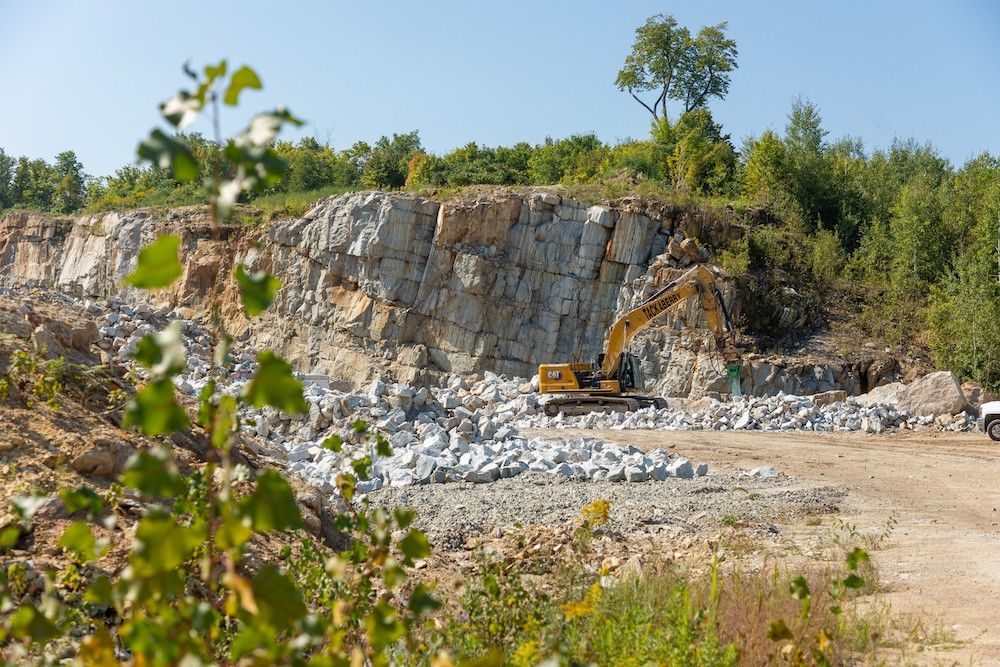
Enhanced weathering speeds up the natural process. Rock is crushed to increase surface area and spread on agricultural fields, which increases the rate of reaction and the total amount of carbon removed. The agronomic benefits can be significant. Many farms see improved nutrient availability, a liming equivalent that reduces soil acidity, and signs of increased yield in trials.
UNDO operates projects in the United Kingdom and Ontario, Canada, pairing field deployment with deep scientific measurement and a data backbone that lenders and buyers can audit.
The financing stack that makes projects run
Early carbon removal requires a mix of capital types. Bury lays out the pieces as they stand in 2025.
Debt is the bottleneck and the unlock. Scalable debt facilities allow UNDO to perform operational activities now and repay the debt as verified credits are delivered to customers in future years. That is the core shift that turns a promising science into a repeatable and growing business.
Equity still matters, especially for funding the upfront costs of growth into new regions, product development, and R&D.
Insurance is now a practical tool, with underwriters writing policies for carbon delivery. These policies help reduce risk for lenders and buyers.
Offtake provides revenue certainty. Multi-year commitments from high-quality buyers lower perceived credit risk and help debt providers get comfortable.
UNDO has already completed a high-profile first-of-a-kind structure involving Standard Chartered and British Airways, and has additional debt partnerships in flight. Bury’s message is simple. Generate repeatable structures, then scale them with each new customer so projects can draw down more debt, spread more rock, and accelerate delivery.
Revenue certainty, risk allocation, and the role of early buyers
Buyers like Microsoft, British Airways, and McLaren matter for an important reason. Their creditworthiness and willingness to learn the technology reduce the commercial risk in early contracts. For debt providers, that makes a difference.
Delivery risk, however, is not just commercial. It is scientific and procedural. The carbon removal community is still collecting field measurements, refining geochemical models, and updating registry methodologies. Those moving goalposts can create verification delays or changes in issued volumes.
Early buyers who are willing to negotiate fair terms and allow for method updates lay the foundation for scalable contracting. That foundation, in turn, lowers financing friction for each subsequent project.
Where costs fall as volume rises
UNDO views its direct costs in two big buckets.
1. Logistics and field operations. This includes quarry sourcing, transport to the site, and spreading. Scale improves pricing in each link. Larger volumes improve negotiating power with quarries and haulers, and higher throughput spreads fixed costs over more tons.
2. Measurement, reporting, and verification. In the near term, UNDO must run extensive field sampling across soil types and land uses to build a strong data bank. As that bank grows, the company can rely more on calibrated geochemical models and less on intensive sampling at every site. That reduces cost per ton while preserving scientific confidence.
Geography introduces another lever. Operating in the global north often brings higher input costs but simpler governance and stronger buyer trust. Expanding into the global south can lower costs but requires careful attention to quality, local partnerships, and financing structures that match perceived risk.
NEWTON, data, and auditability as finance enablers
UNDO’s NEWTON platform is the company’s data backbone. It logs what was spread, where, and when, including GPS traces from the tractors that apply rock on fields. It also stores scientific measurements with timestamps and coordinates.
This is not just a database. It is a risk reducer.
For registries, NEWTON provides the evidentiary trail for verification.
For lenders, it offers a live picture of operational progress and a clear link to the generation of future credits.
For buyers, it creates transparency and trust, which supports offtake and helps keep premiums in check.
In early markets, good data can be the difference between a structure that attracts institutional capital and a structure that remains bespoke. UNDO is leaning into that difference.
Rock choice, permanence, and pricing
UNDO deploys two main rock types with different weathering profiles and supply characteristics.
Wollastonite weathers quickly. It is valuable for furthering the science, because it produces measurable field data in shorter time frames. Buyers often prefer nearer-term credits, so these tons can command higher prices. The rock itself is more expensive, which pulls in the other direction on unit costs.
Basalt weathers more slowly. It is globally abundant and will be pivotal for long-term scale.
Both rocks permanently lock away carbon, and both show positive agronomic effects in UNDO’s trials.
A portfolio approach makes sense. Faster weathering builds data and revenues now. Basalt builds the backbone for scale. Together, they help match buyer preferences and balance cost and permanence.

The farmer’s value proposition
Enhanced weathering only scales if it works for growers. UNDO positions the offer simply.
The rock improves soils by lowering acidity, similar to conventional liming, while adding silicate-derived nutrients.
Trials have shown yield increases, including up to 20% in a UK spring oat study using basalt.
The application can reduce the need for other inputs, although it is not a complete replacement. Requirements still depend on crop and local conditions.
At UNDO’s Ontario project, the company subsidizes the supply and spreading, while the farmer covers haulage to the field. For many growers, that mirrors what they already do with lime. It lowers the friction of adoption and makes participation repeatable across seasons.
Policy and buyer signals
Bury describes mixed tailwinds shaped by price and trust. Buyers want high quality at a low price. Those desires do not always align.
The European Union continues to strengthen its compliance frameworks, and many in the sector hope to see convergence between compliance and voluntary markets over time.
Confidence in the United States is more uneven, but UNDO’s footprint in the UK and Canada helps hedge that risk.
Aviation demand is a special case. Under the CORSIA framework, airlines face restrictions on what they can buy, which pushes them to search actively for high-quality options elsewhere. That search helped enable the British Airways agreement with UNDO, and it is reflected in other deals in carbon removal, such as purchases from direct air capture providers.
The signal that matters most is the continued entry of recognizable names that are willing to make multi-year commitments while the science and methods mature.
Risk management for finance
UNDO models three clusters of risk and builds practical hedges.
Delivery and verification. The science evolves, and methodologies change. UNDO mitigates by engaging directly with registries and the research community, keeping alignment on the direction of travel. Contracts are structured with buffers. The company does not pre-sell all expected credits, leaving headroom for changes in yield or verification timelines.
Logistics and direct costs. Sourcing, hauling, and spreading carry uncertainties, especially as the company moves into new geographies and rock types. UNDO addresses this through partnerships with local operators who know the agricultural network and can secure reliable field access at reasonable cost.
Scale strategy. The company wants to grow quickly, which can add project selection risk. A programmatic approach to partner selection, standard operating procedures, and the NEWTON data layer all help control that risk while preserving speed.
Community, jobs, and local value
Enhanced weathering is not just about credits. It is about building a regional service industry that keeps money circulating locally.
Projects work with existing industries and supply lines - local quarries, haulers, and farm contractors.
Field activity supports trades and rural businesses.
In agricultural communities, the co-benefits of healthier soils can be as important as the credits themselves.
UNDO’s model depends on local relationships. That creates accountability and builds the human infrastructure needed to sustain annual programs at scale.
Customers and products
UNDO sells primarily to enterprises and also offers individual subscriptions that deliver removal over a 20-year period. The enterprise segment is the near-term priority because it unlocks finance and scale.
Price sensitivity varies by buyer. Some corporates value agricultural co benefits because the story fits their supply chain. Others are focused strictly on carbon attributes. The common requirement is partnership. Buyers like Microsoft have supported UNDO’s deep science sites, invested time in understanding the method, and helped the technology progress beyond a narrow transactional frame. That support deserves a pricing structure that keeps the project financeable.
Milestones to watch in 2025 and 2026
Bury highlights several proof points that would show enhanced weathering is moving from thousands to millions of tons.
A scalable debt partnership that allows drawdowns to grow as new customers sign and as rock is deployed.
External verification of credits from UNDO’s Ontario project. This is a keystone for the fast-weathering rock pathway and for lender confidence.
A broader buyer base committing to enhanced weathering credits, which signals market acceptance beyond a handful of innovators.
Her single ask to the finance community is direct. Be curious, educate your teams on the technology, and be willing to take measured risks where data and contracts justify it. Change at the climate scale will not occur if capital restricts itself to the safest corners of the market.
Practical takeaways for finance leaders
Treat ERW like infrastructure with a data spine. Underwrite the supply chain, the NEWTON data trail, and the registry pathway, not just the headline offtake.
Ask for delivery insurance where appropriate, and push for portfolio structures that diversify rock types and geographies.
Encourage blended offtake profiles. Near-term credits support early cash flow. Slower weathering builds low-cost scale.
Consider multi-year offtakes that step down in price as MRV costs fall and models take over from intensive sampling.
Conclusion: from promising science to repeatable finance
Enhanced rock weathering sits at a productive intersection. It is a natural process with strong scientific foundations. It can use existing agricultural machinery and logistics. It offers measurable co-benefits. It also requires rigorous data, sensible contract design, and capital that is willing to move before every uncertainty is eliminated.
UNDO’s approach joins those pieces. Debt facilities matched to staged delivery. Offtakes from reputable buyers. Insurance written to the risk. A field and lab program that feeds a transparent data platform. A rock portfolio that balances speed and abundance. And a farmer’s proposition that makes agronomic sense.
If the sector delivers the next milestones that Bury outlines, enhanced weathering will look less like a collection of pilots and more like a system. That system can grow to millions of tons, while supporting rural economies and giving finance a credible path to scale carbon removal that is auditable, permanent, and grounded in real operations.
Topics
More from Net Zero Compare Podcast
#62: Afonso Firmo on Australia's Mandatory Climate Reporting: Lessons for Carbon Accounting, AI, and Decarbonization
#61: Lisa Drees on Building Trust in Green Hydrogen Supply Chains: Technology Is Only Part of the Answer
#60: Brandon Lapsys on Why Recycling Projects Depend on End Markets, Operational Discipline, and Better Waste Data
#59: Lisa Wright on Why eVTOL Infrastructure May Matter as Much as the Aircraft
#58: Arjun Gupta on Packaging EPR in the US: How AI Is Changing Compliance, Data Management, and Cost Forecasting