


Available Carbon Accounting Features
Missing Carbon Accounting Features
Pricing
Starting Price
Options
Available Since
Deployment Options
- Web Browser (Cloud - Based)
Good Option For
- Medium Business (51-250 people)
- Large Business (250+ people)
Deep dive
Core Features
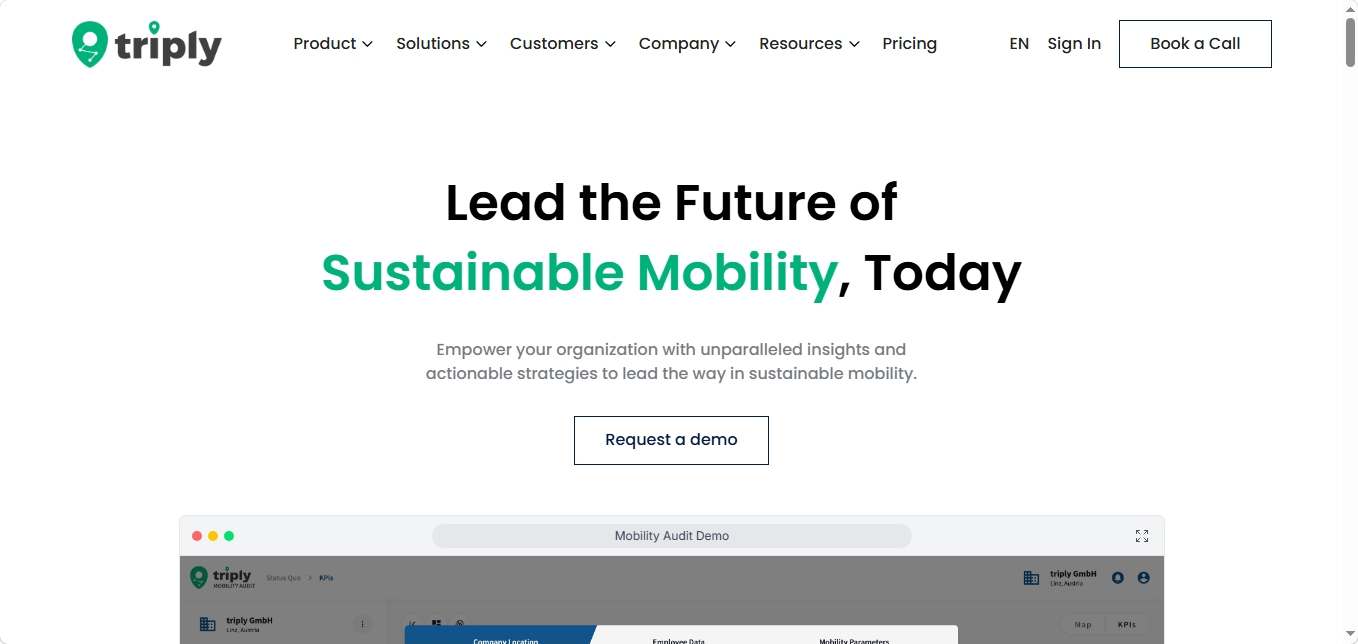
triply's approach begins with relatively simple information: company locations and employees' postal codes are sufficient for an initial analysis. Organizations can add anonymized information such as working hours, shifts and preferred transport modes for greater precision. The platform applies geospatial analysis and mobility data to turn these inputs into commuting, emissions and cost insights.
Employee Commuting Analysis: Maps how accessible workplaces are by different transport modes and analyzes employee commuting patterns across locations. This can be expanded with information on shifts, working times and transport preferences.
Scope 3 Commuting Emissions: Calculates emissions associated with employee commuting, addressing Scope 3 Category 7. Results provide organizations with a mobility-related emissions baseline that can support sustainability reporting and reduction planning.
Mobility Scenarios & Recommendations: Analytics identify potential improvements and allow organizations and consultants to examine mobility strategies and simulate their effects.
Cost-Benefit Analysis: Combines environmental and financial considerations, helping organizations identify inefficient mobility expenditure and assess the costs, savings and potential returns associated with alternative measures.
Dashboards & Visualization: Interactive dashboards present mobility, emissions and cost information and help users understand the potential impact of changes across their workforce and locations.
Employee Mobility Optimization: triply can generate more suitable commuting options for employees and help organizations assess mobility benefits, infrastructure and other measures intended to make lower-emission travel practical for their workforce.
Closing Insights
Founded by Sebastian Tanzer and Christopher Stelzmüller, Linz-based triply concentrates on a relatively specific emissions problem: employee mobility. This specialization allows the platform to consider factors that a simple commuting questionnaire or emissions calculation may miss, including workplace accessibility, transport infrastructure, employee locations, shifts, costs and the practicality of alternative travel modes.
triply has been deployed by Austrian organizations of different sizes to address different mobility reporting needs, from helping Raiffeisenlandesbank Oberösterreich establish a CO₂ baseline across 4,600 employees at 260 locations to analyzing the commuting patterns of 426 employees across 12 locations for HYPO Oberösterreich. In both cases, the analysis supported Scope 3.7 reporting while also identifying opportunities to improve employee mobility.