


Available Climate Risk Management Features
Missing Climate Risk Management Features
Pricing
Starting Price
Options
Available Since
Deployment Options
- Web Browser (Cloud - Based)
Good Option For
- Small Business (11-50 people)
- Medium Business (51-250 people)
- Large Business (250+ people)
Deep dive
Core Features
Sustainaccount combines climate datasets, geospatial mapping, and scenario analysis to help organizations evaluate long-term exposure to environmental risks across facilities, infrastructure, and supply chains. Accordingly, its main capabilities include:
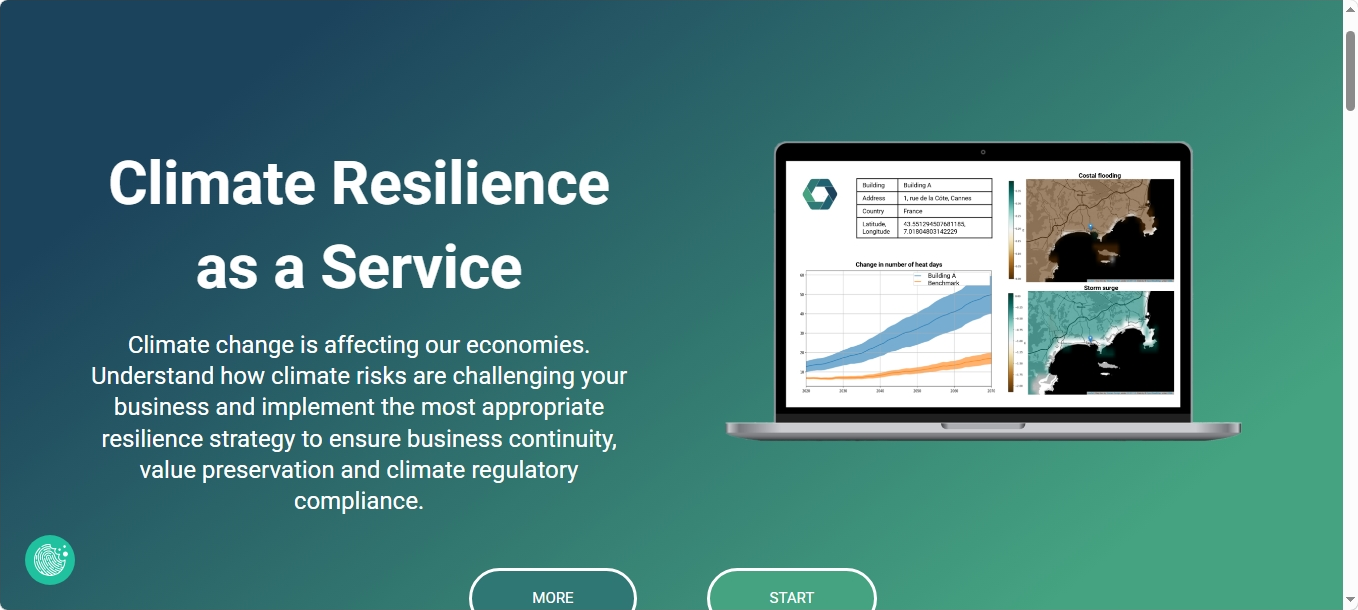
Climate Risk Mapping — Assesses exposure to flooding, heatwaves, storms, drought, and other climate hazards across geographic locations and operational assets.
Scenario-Based Analysis — Models potential climate impacts under different warming and emissions scenarios to support long-term planning and investment decisions.
Supply Chain Risk Assessment — Identifies climate vulnerabilities affecting supplier networks, logistics routes, and procurement dependencies.
Infrastructure and Real Estate Analysis — Supports climate-risk evaluation for buildings, industrial sites, and infrastructure portfolios exposed to physical climate hazards.
Financial and Insurance Applications — Provides risk data intended to support insurers, lenders, and investors evaluating climate-related operational and asset risks.
Decision-Support Dashboards — Delivers visual analytics and reporting tools for resilience planning, adaptation prioritization, and climate governance processes.
Closing Insights
Sustainaccount’s recent work demonstrates its expertise in translating physical climate risks into operational and financial decision-making tools. Its 2026 white paper focusing on river-flood risk assessment at the asset level and outlines a new methodology for connecting flood modeling with financial exposure analysis and climate resilience planning. The methodology incorporates climate scenarios, flood-protection adjustments, proximity-risk analysis, and Climate Value at Risk (CVaR) calculations intended for infrastructure operators, real-estate investors, insurers, banks, and public authorities.
The publication also reflects broader regulatory developments in Europe. Sustainaccount connects its framework to regulations such as the EU Taxonomy Regulation and the EU Floods Directive, suggesting that the platform is increasingly oriented toward organizations requiring technically detailed, disclosure-ready climate-risk analysis.
Sustainaccount structures its offering around three tiers: Resilience Starter, Resilience Taxonomy, and Resilience Premium. The plans scale from basic climate-risk dashboards and downloadable reports to more detailed asset-level analysis, EU Taxonomy/SFDR-aligned assessments, and consultancy-supported adaptation planning. Rather than publishing fixed public prices, the company appears to use customized pricing based on portfolio size, asset complexity, and reporting requirements.