

Available Carbon Accounting Features
Missing Carbon Accounting Features
Pricing
Starting Price
Options
Available Since
Deployment Options
- Web Browser (Cloud - Based)
Good Option For
- Small Business (11-50 people)
- Medium Business (51-250 people)
- Large Business (250+ people)
Deep dive
Core Features
Sea Carbon Management Platform is built around voyage-level operational data from the shipping industry rather than generic corporate emissions inputs. It has practical capabilities such as:
Sea Cargo Charter-aligned calculations – The platform calculates emissions using the official Sea Cargo Charter methodology so charterers and shipowners can assess whether their shipping activity aligns with industry decarbonization pathways.
Voyage-level emissions accounting – Carbon outputs are calculated from actual shipping activity by combining voyage details, fuel data, and vessel performance information.
Multi-source maritime data integration – The system aggregates AIS vessel tracking, in-house operational data, and IMO-based estimates to produce a granular picture of emissions scenarios.
Fleet benchmarking against IMO targets – Dashboards allow users to compare fleet emissions with IMO decarbonization trajectories and other benchmark indicators.
Continuous monitoring of chartering emissions – The platform tracks emissions throughout the year, enabling operators to identify performance issues and improvement opportunities before reporting deadlines.
Closing Insights
The Sea Carbon Management Platform is part of the broader Sea digital marketplace, a maritime technology initiative developed to modernize commercial workflows such as charterparty negotiations, vessel tracking, and freight analytics. Within that ecosystem, the carbon module addresses a growing need among charterers and cargo owners to quantify the emissions associated with their shipping activities. Named users include Sipchem and Anglo American.
Sea is especially relevant for companies whose reporting obligations sit inside shipping operations: Sea Cargo Charter signatories, bulk charterers, cargo owners, and shipowners that need to assess and disclose the climate alignment of chartering activity. The fit is strongest where voyage-level evidence matters, including firms exposed to European rules such as FuelEU Maritime and EU ETS, or firms reporting against global shipping frameworks tied to IMO decarbonization goals.
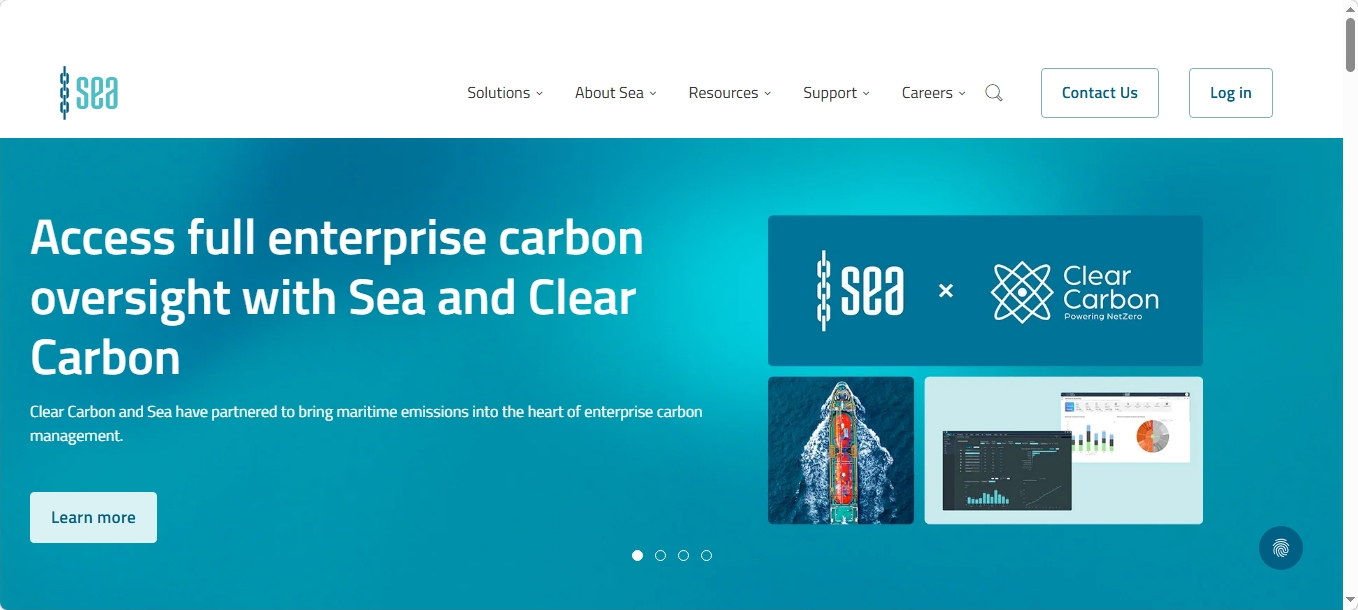
Sea’s recent partnership with Clear Carbon also extends maritime emissions data into wider enterprise carbon planning.