
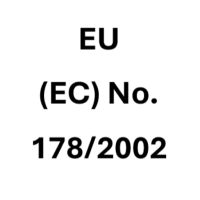

Summary
Details
- European Union
Applies broadly to food and feed business operators across the supply chain, including importers once products enter the EU market.
Article 18 is baseline, not necessarily full farm-to-fork event traceability. It is sequential and link-based unless sectoral rules require more detail.
Third-country exporters are not directly subject to Article 18 as EU operators, but EU importers must capture the necessary supplier identity information.
Deep dive
📩 Stay ahead of climate regulation and reporting shifts
Regulatory updates, reporting standards, and new climate software — distilled into one concise weekly brief for decision-makers.
Thanks for signing up. Please check your inbox to confirm your subscription.
Practical updates. Once per week.
What’s Required
1) Core traceability obligation (Article 18)
Article 18 requires that “the traceability of food, feed, food-producing animals, and any other substance intended to be, or expected to be, incorporated into food or feed shall be established at all stages” of production, processing and distribution. Operators must be able to identify from whom they were supplied and to whom they supplied a product. This is the operational “one step back, one step forward” model.
2) Identification and information systems
Article 18 also requires that food and feed placed on the market be “adequately labelled or identified to facilitate its traceability” via documentation or information systems. The regulation does not prescribe one uniform IT system, but it does require that the operator’s system reliably retrieve the legally required information quickly, accurately, and consistently, including during crisis events.
3) Import chain responsibility sits with the EU importer
Commission guidance clarifies that for imports, Article 18’s objective is fulfilled because the requirement extends to the EU importer. The EU importer must be able to identify from whom the product was exported in the third country, even though the third-country exporter is not directly bound by Article 18 as an EU legal obligation. This has practical implications for supplier onboarding, contract clauses, and document management at the border.
4) Traceability as a trigger for withdrawal and recall compliance (Articles 19 and 20)
Traceability under Article 18 is not an isolated requirement. It supports the operator’s ability to comply with:
Article 19 (food business operators): If an operator considers or has reason to believe a food is not in compliance with food safety requirements, it must initiate procedures to withdraw the food from the market, and when the product may have reached consumers, effectively recall and inform consumers as appropriate.
Article 20 (feed business operators): Similar withdrawal obligations apply for unsafe feed.
In practical compliance terms, traceability records must be structured so withdrawals and recalls can be executed quickly and defensibly, including identifying affected lots/batches and distribution recipients.
5) Sector-specific and “beyond one step” expectations
General Food Law sets the baseline. Sectoral EU rules can impose deeper traceability (for example, specific animal health or product-specific regimes), and commercial practice frequently goes beyond Article 18 (e.g., requiring upstream suppliers to provide more granular event data). Commission guidance notes that requests to go beyond one-step traceability are often contractual practice rather than a direct legal requirement of Article 18 itself, but they are common in higher-risk categories and in retailer-driven supply chains.
6) Evidence, record retention, and retrieval readiness
The regulation itself is principle-based, so the “minimum record set” is defined by what is necessary to identify supplier and the customer and to identify the product sufficiently to enable traceability. In enforcement practice, recurring deficiencies include: inability to retrieve records quickly, incomplete supplier/customer identifiers, poor linkage between ingredients and finished batches, and lack of documentation supporting internal transformations (repacking, relabelling, processing). Operators should treat this as a controlled record system: standardized identifiers, consistent batch/lot linking, change control for relabelling, and periodic mock recall testing.
Important Deadlines
Adoption: 28 January 2002 (Regulation date).
Application: The regulation has long been applicable; Article 18 is an ongoing duty.
Operational deadlines: Typically set by national competent authority requests during incidents (e.g., deadlines to provide traceability information during investigations) and by internal recall KPIs.
Current Status
In force EU-wide. Article 18 remains the baseline traceability requirement across EU food law, complemented by sector rules and enforcement practice. Commission guidance continues to be used as an interpretive reference for “one step back, one step forward” and importer responsibilities.
Penalties for Non-Compliance
Penalties are enforced via Member State competent authorities under national enforcement frameworks, but typical consequences include:
Administrative fines and corrective actions.
Orders to improve systems, suspend placing on the market, or withdraw products.
Heightened scrutiny and audits following an incident.
In severe cases, criminal exposure under national law where negligence or intent is established.
Traceability failures become especially sanctionable when they delay withdrawals/recalls or obstruct investigations.
Examples of Known Violations
Common failure modes include:
Inability to identify immediate suppliers for specific lots during an investigation.
Incomplete customer lists (e.g., missing downstream recipients in B2B distribution).
Poor batch integrity due to rework, commingling, or repacking without controlled traceability links.
Traceability “gaps” during outsourced logistics, co-manufacturing, or cross-docking.
Weak governance over relabelling or product re-identification, leading to mismatched identifiers.
Resources

Cut through the green tape
We don't push agendas. At Net Zero Compare, we cut through the hype and fear to deliver the straightforward facts you need for making informed decisions on green products and services. Whether motivated by compliance, customer demands, or a real passion for the environment, you’re welcome here. We provide reliable information. Why you seek it is not our concern.