

Available ESG Monitoring Features
Missing ESG Monitoring Features
Pricing
Starting Price
Options
- Pay-As-You-Go
Available Since
Deployment Options
- Web Browser (Cloud - Based)
Good Option For
- Freelancers (1 person company)
- Microbusiness (2-10 people)
- Small Business (11-50 people)
- Medium Business (51-250 people)
- Large Business (250+ people)
Deep dive
Core Features
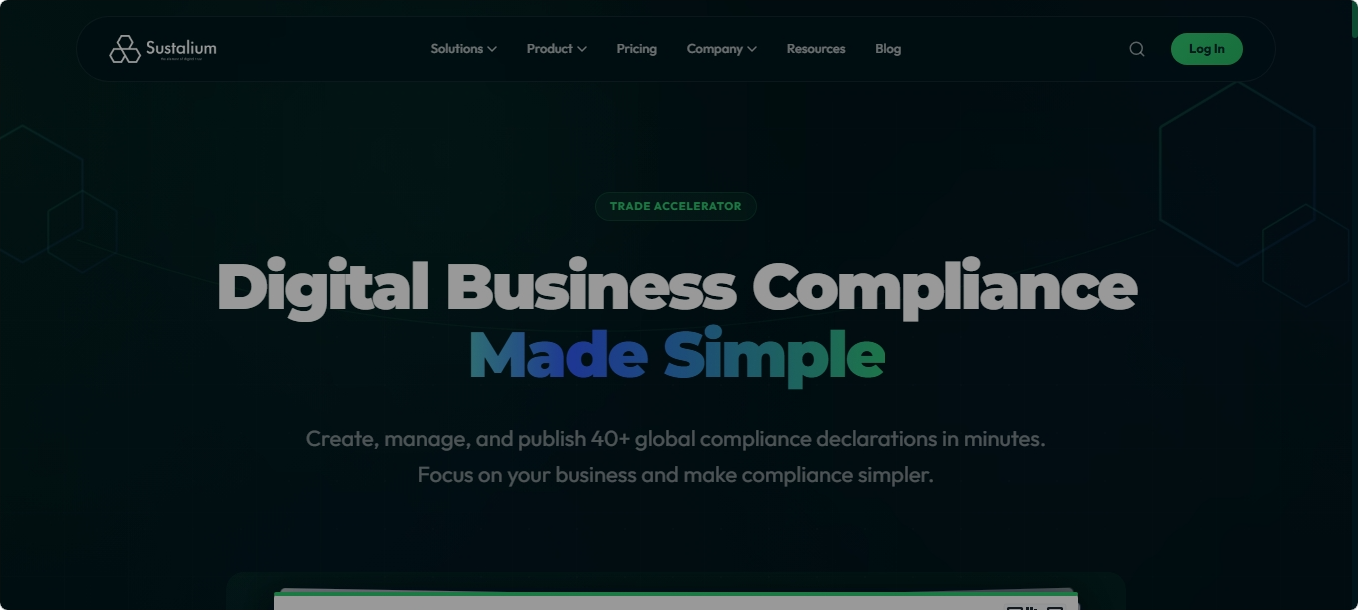
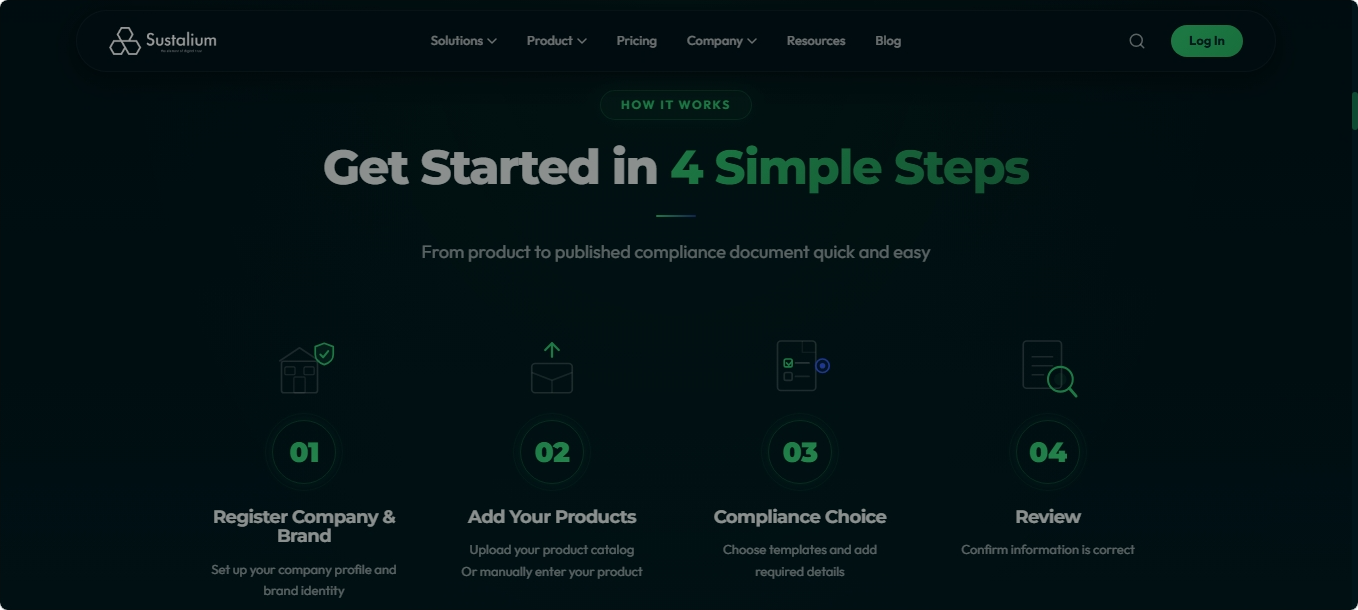
Sustalium is built around a template-driven compliance model, where regulatory requirements are embedded into structured workflows that guide users from product data input to published, verifiable certificates. The platform focuses on simplifying multi-regulation compliance through standardised outputs that can be shared across supply chains and jurisdictions. Its core features include:
Digital Product Passports (DPP) – Generates product-level digital passports aligned with EU ESPR requirements, including traceability, material composition, and lifecycle data.
Multi-Framework Compliance Templates – Provides pre-configured templates mapped to regulatory requirements, enabling faster certificate creation across sectors.
QR Code-Based Data Access – Assigns each product or certificate a unique QR code and URL, enabling instant access to compliance information across the supply chain.
Supply Chain Traceability – Structures product and supplier data into verifiable, shareable documents used in audits, inspections, and cross-border operations.
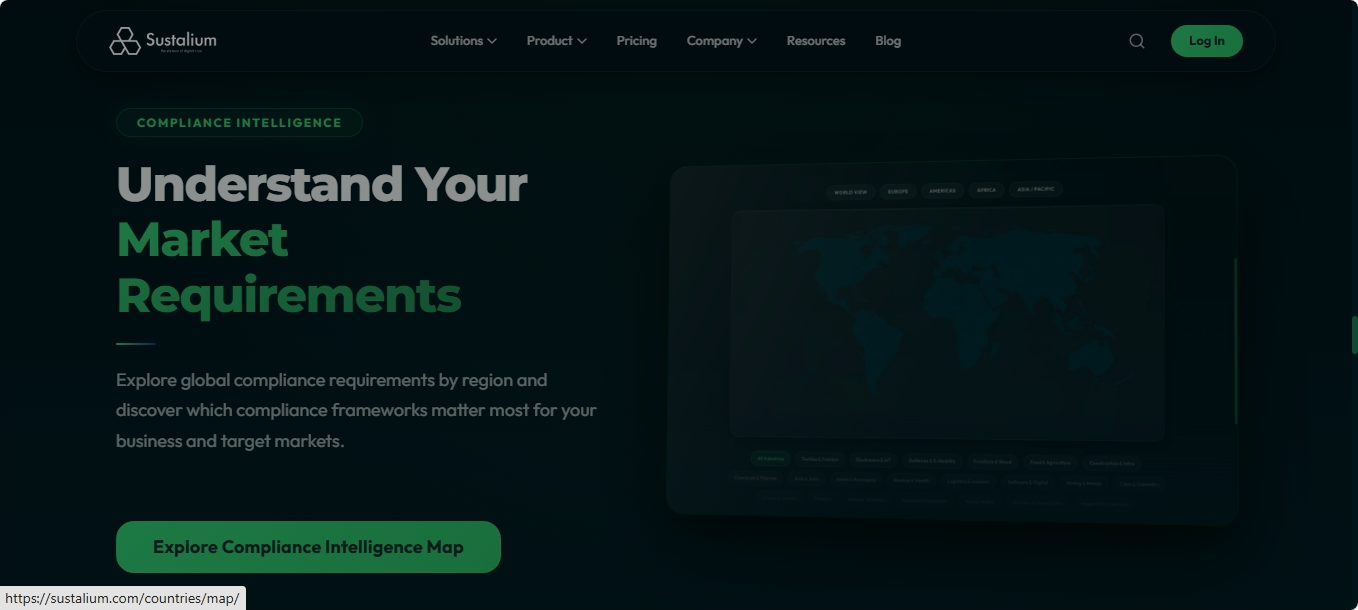
Multi-Language and Global Coverage – Supports compliance across multiple regions with built-in language options and coverage of international regulatory frameworks.
Analytics and Tracking – Tracks certificate usage and engagement through dashboards, including scan activity and geographic interaction data.
Closing Insights
Sustalium was founded by Youssef Khayali and Amaro De Abreu, combining experience in compliance workflows, supply chain systems, and software engineering. Sustalium reflects a shift from static compliance documentation toward what it describes as “generative compliance,” where certificates are dynamically created from structured product data rather than compiled manually. This approach is particularly relevant as regulations such as ESPR expand requirements for product-level transparency across multiple sectors.
A practical example of this model is its use by MadFibers, a producer of sugarcane-based packaging materials. The company uses Sustalium to generate EU ESPR-compliant Digital Product Passports for its products and to track sustainability metrics across operations. Through the platform, MadFibers connects product-level data to environmental performance indicators such as emissions, water use, and waste reduction, enabling more structured reporting and alignment with certification schemes.
Its SME-first approach is central to its differentiation. Sustalium focuses on manufacturers, retailers, and service providers that need to meet EU and global requirements without enterprise-scale systems. Pricing reflects this positioning, with a pay-per-certificate model starting around €10 per document and packaged tiers designed to reduce costs compared to traditional consulting-based compliance.