


Available Energy Management Features
Missing Energy Management Features
Pricing
Starting Price
Options
Available Since
Deployment Options
- Web Browser (Cloud - Based)
Good Option For
- Small Business (11-50 people)
- Medium Business (51-250 people)
- Large Business (250+ people)
Deep dive
Core Features
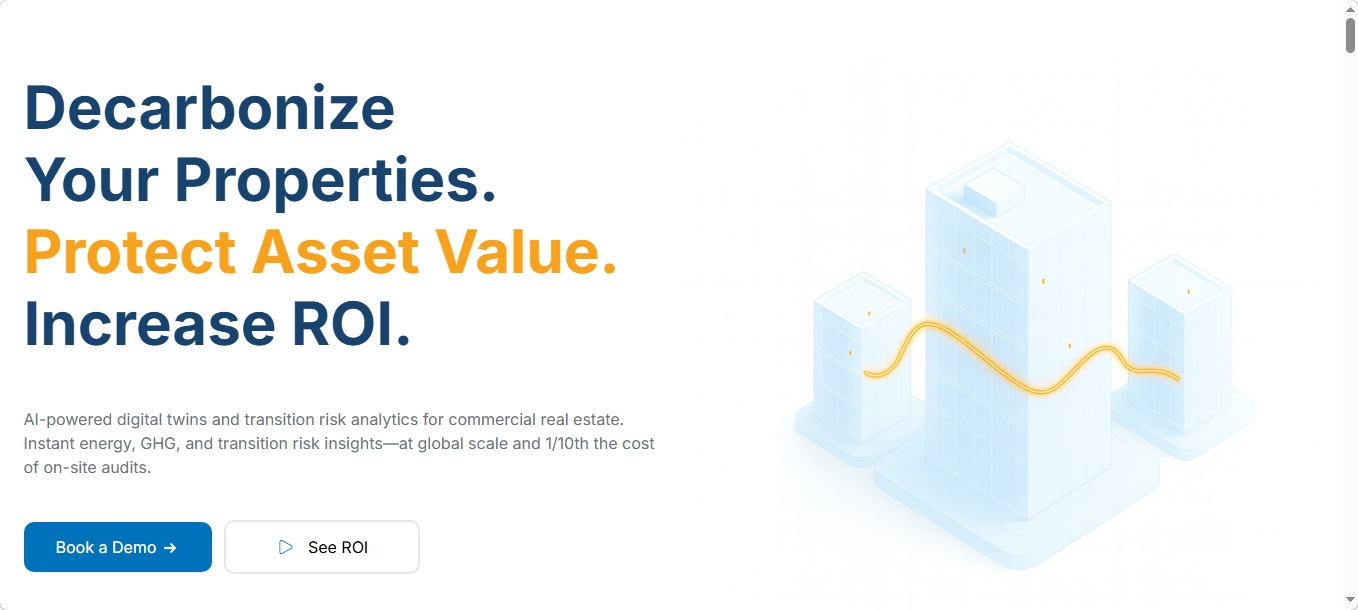
Helios Exchange is built around a bottom-up, science-based energy modelling approach that connects building performance analytics with financial structuring. Rather than focusing solely on emissions reporting, it integrates technical assessment, risk evaluation, and financing pathways into a unified workflow for retrofit decision-making. Its main features include:
Building Energy Performance Assessment: Establishes a detailed baseline of energy use, costs, and emissions using standardized analytics, enabling consistent comparison across buildings and portfolios.
Energy Retrofit Simulation: Uses calibrated building energy models to test upgrade scenarios, estimating impacts on energy consumption, emissions, CAPEX, and return on investment before implementation.
Energy Efficiency Risk Rating: Quantifies the performance risk of retrofit projects, helping investors and lenders evaluate uncertainty and supporting underwriting and insurance of projected savings.
Integrated Financing Marketplace: Coordinates access to third-party financing models such as PACE, energy service agreements, and leases, reducing transaction costs and enabling projects without upfront capital.
Remote Energy Audits and Analytics: Replaces traditional on-site audits with AI-driven digital twins and remote modelling, allowing rapid, portfolio-wide analysis at significantly lower cost and time.
Measurement & Verification: Tracks actual post-retrofit performance using standardized protocols, validating energy savings and ensuring alignment between projected and realized outcomes.
Closing Insights
Helios Exchange was founded by Pierre Trevet, formerly Head of Sustainability Finance at C3 Energy, and Hewson Baltzell, a co-founder of Innovest (later MSCI ESG Research). Their backgrounds in sustainability finance and ESG data shaped the platform’s focus on linking energy analytics with capital markets.
The platform has been applied in large-scale urban contexts such as New York City, where it has supported retrofit planning and financing workflows for commercial buildings. It is used by property owners, institutional investors, and energy service providers who require both technical and financial visibility when addressing emissions reductions.
Helios Exchange is positioned within a regulatory environment where building performance standards (e.g., Local Law 97 in New York) increasingly tie emissions to financial risk. Its integration of scenario modelling, risk analysis, and financing pathways reflects this shift toward forward-looking asset management.
Recent development of AI-based digital twins and large-scale building datasets indicates a move toward portfolio-wide analysis rather than project-by-project assessments. For users, this suggests a platform oriented toward scaling retrofit decisions across entire portfolios while aligning with evolving disclosure and decarbonization requirements.