


Available Carbon Accounting Features
Missing Carbon Accounting Features
Pricing
Starting Price
Options
Available Since
Deployment Options
- Web Browser (Cloud - Based)
Good Option For
Deep dive
Core Features
Carbon Footprint Management: Tools to calculate and monitor greenhouse gas emissions across organisational scopes.
Scope 1 & Scope 2 Emissions Tracking: Structured management of direct and energy-related emissions data.
Scope 3 Emissions Tracking: Support for broader value chain emissions consolidation, depending on data inputs.
ESG Data Consolidation: Centralized ESG metrics tracking aligned with reporting frameworks.
Regulatory Reporting Alignment: Support for compliance with CSRD and other ESG disclosure frameworks.
Customizable Dashboards & Reporting: Dashboards providing visibility into emissions performance and ESG indicators.
Workflow & Governance Management: Approval processes and documentation tracking for reporting cycles.
Plans & Pricing
Tennaxia operates under an enterprise subscription model.
Pricing likely depends on:
Number of sites and entities.
Scope of carbon accounting modules.
Regulatory reporting complexity.
Integration requirements.
User volumes.
No public pricing tiers are disclosed.
Integrations
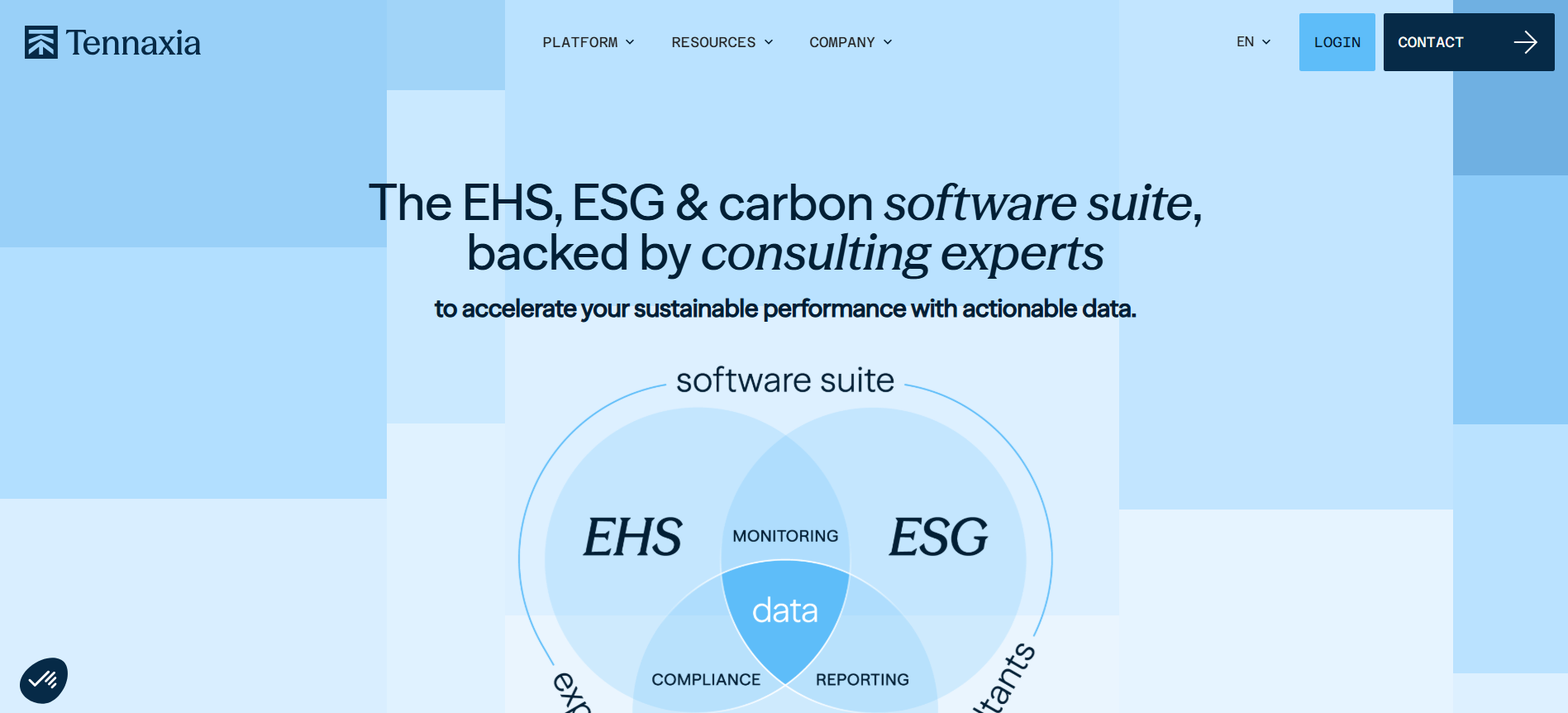
Tennaxia integrates with enterprise systems to consolidate ESG and carbon data.
Key integration areas include:
ERP systems.
Energy management systems.
Environmental data sources.
Data warehouses and BI tools.
API-based data exchange.
There is no clear indication of direct IoT sensor hardware as a core feature, though integration with environmental data systems is implied.
Certifications & Assurance
Tennaxia supports audit readiness and regulatory compliance in ESG and carbon reporting.
The platform may assist organizations in:
Preparing GHG inventories.
Supporting third-party verification processes.
Maintaining documentation aligned with regulatory standards.
However, Tennaxia is not positioned as:
An emissions verification authority.
A carbon certification body.
Its assurance role relates to data management and reporting support.
Expert Voices & Reviews
Tennaxia is recognised in the environmental and carbon management software space, particularly within European markets.
Industry positioning highlights:
Structured carbon management capabilities.
ESG reporting alignment.
Multi-site environmental data consolidation.
From a Net Zero Compare perspective:
The platform provides operational carbon data management.
It supports regulatory ESG disclosure processes.
It does not appear to function as an advanced climate modelling or LCA analytics system.
Its market positioning sits between carbon accounting and ESG reporting governance.
Customers & Use Cases
Tennaxia is typically used by:
Industrial manufacturers.
Energy-intensive companies.
Multi-site enterprises.
Sustainability reporting teams.
Typical use cases include:
Calculating corporate carbon footprints.
Monitoring emissions performance over time.
Preparing CSRD-aligned disclosures.
Managing ESG reporting cycles.
Supporting internal climate strategy tracking.
Closing Insights
Tennaxia should be positioned as an ESG and carbon management platform with emissions tracking capabilities. Unlike CSRD-only reporting tools, it appears to include structured greenhouse gas data management functionality. However, it should not be positioned as a climate modelling, physical risk analytics or lifecycle assessment system. Its primary value lies in carbon footprint management and regulatory ESG reporting support.