


Available Other Features
Missing Other Features
Pricing
Starting Price
Options
Available Since
Deployment Options
Good Option For
- Individuals
- Freelancers (1 person company)
- Microbusiness (2-10 people)
- Small Business (11-50 people)
- Medium Business (51-250 people)
- Large Business (250+ people)
Deep dive
Core Features
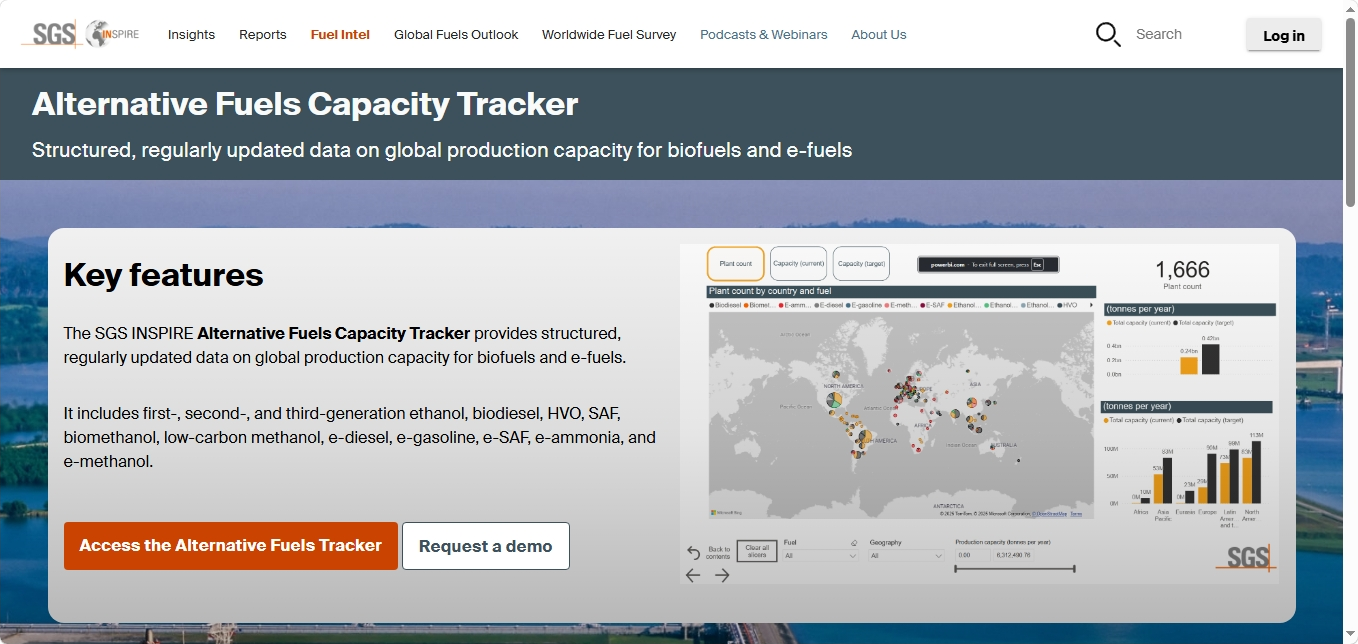
The Alternative Fuels Capacity Tracker is delivered through a Power BI-based interface, with structured data updated regularly by SGS INSPIRE. Its features include:
Alternative Fuel Coverage: Tracks first-, second-, and third-generation ethanol, biodiesel, hydrotreated vegetable oil (HVO), sustainable aviation fuel (SAF), biomethanol, e-diesel, e-SAF, e-ammonia, and other e-fuels.
Production Facility Database: Provides facility-level records identifying plant operators, geographical locations, and the year production operations began.
Production Capacity and Volumes: Records actual and targeted production volumes, enabling users to examine existing capacity alongside planned production developments.
Feedstock and Technology Information: Identifies the feedstocks and production technologies associated with individual facilities, supporting analysis of different alternative fuel production pathways.
Interactive Dashboards: Enables users to create customized Power BI dashboards and visualizations, facilitating comparisons of alternative fuel production capacity across technologies, markets, and project categories.
Closing Insights
The Alternative Fuels Capacity Tracker forms part of SGS INSPIRE, SGS's broader fuel market intelligence and consulting service. SGS announced the tracker in 2025, providing a dedicated resource for monitoring biofuel and e-fuel production developments. With a coverage of nearly 1,700 facilities, the tracker complements other SGS INSPIRE resources, including the Global Database of Fuel Quality Specifications.
The tracker is available independently or through SGS INSPIRE's biofuels subscription packages. SGS also offers specialist consulting and research services. For organizations evaluating alternative fuel markets, the tracker provides a structured means of comparing production developments across countries and fuel technologies.