


Available Carbon Accounting Features
Missing Carbon Accounting Features
Pricing
Starting Price
Options
Available Since
Deployment Options
- Web Browser (Cloud - Based)
Good Option For
Deep dive
Core Features
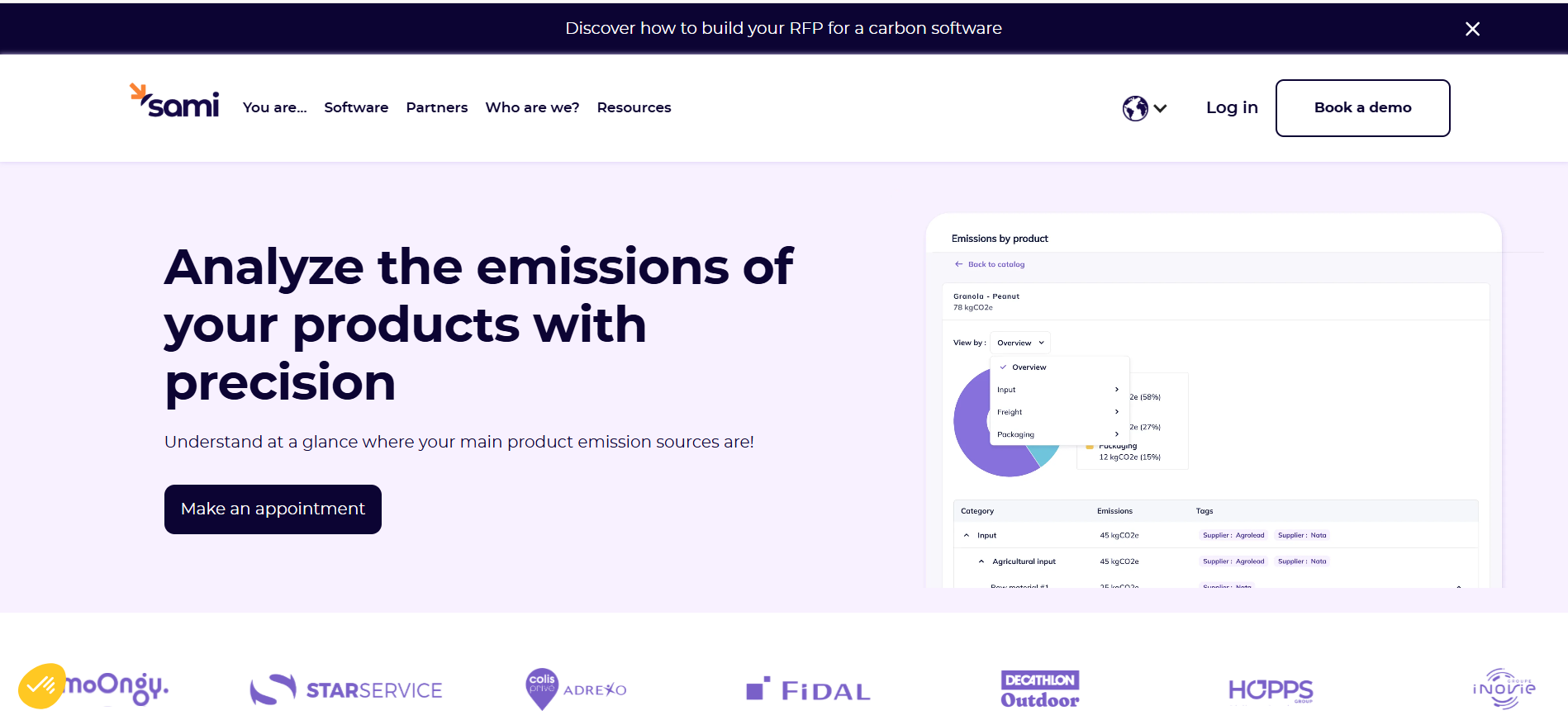
Product Carbon Footprint Calculation: The platform enables organizations to calculate greenhouse gas emissions associated with individual products. The system aggregates lifecycle data and applies emissions factors to estimate product-level carbon footprints. These calculations help companies understand the climate impact associated with their products.
Lifecycle Emissions Analysis: SAMI analyses emissions across product lifecycle stages, including materials sourcing, manufacturing processes, logistics, and product use. Lifecycle emissions analysis helps organizations identify emissions hotspots within product supply chains.
Supply Chain Emissions Analysis: The platform allows companies to analyse emissions associated with suppliers and upstream production activities. This helps organisations understand the contribution of supply chains to product carbon footprints.
Emissions Factor Databases: The platform uses emissions factor datasets to convert activity data into greenhouse gas emissions expressed in CO₂e. These emission factors are essential for calculating lifecycle emissions.
Carbon Analytics and Reporting: SAMI includes dashboards and analytics that allow organizations to analyse carbon footprints and evaluate emissions trends across product portfolios. These analytics support internal climate strategies and sustainability decision-making.
Decarbonization Insights: Product carbon footprint analysis helps organizations identify opportunities to reduce emissions through design changes, material substitutions, or supply chain improvements.
Plans & Pricing
Pricing information for the SAMI Product Carbon Footprint platform is not publicly disclosed. The software appears to operate under enterprise SaaS subscription models depending on the number of products analysed and the scope of lifecycle emissions modelling.
Integrations
SAMI integrates with enterprise systems such as ERP platforms, product lifecycle management systems, and supply chain databases to collect product and supply chain data used in carbon footprint calculations. These integrations allow organizations to combine operational product data with emissions factors when analysing lifecycle emissions.
Certifications & Assurance
Product carbon footprint analyses performed using SAMI can support organizations applying recognised greenhouse gas accounting methodologies. However, formal product carbon footprint claims or environmental declarations may require independent verification.
Expert Voices & Reviews
Product carbon footprint software has become increasingly important as organizations seek to understand emissions across value chains. In many industries, a significant share of emissions originates in supply chains and product lifecycles rather than direct operations.
Platforms like SAMI enable organisations to quantify these lifecycle emissions and identify opportunities to reduce product-related carbon impacts.
From an NZC editorial perspective, SAMI’s PCF solution should be considered product lifecycle carbon accounting software focused on analysing emissions associated with products and supply chains.
Customers & Use Cases
Typical use cases include:
calculating product carbon footprints.
analysing lifecycle emissions of products.
identifying emissions hotspots in supply chains.
evaluating product design alternatives.
supporting climate strategy initiatives.
The platform is particularly useful for organizations seeking to understand and reduce emissions associated with products.
Closing Insights
From a Net Zero Compare perspective, the SAMI Product Carbon Footprint solution should be positioned as product carbon footprint and lifecycle emissions analysis software. The platform helps organizations measure emissions associated with products and identify opportunities to reduce lifecycle carbon footprints. These insights help companies integrate climate considerations into product design and supply chain decisions. While product emissions data may contribute to broader corporate climate reporting, the platform is primarily designed for product-level emissions analysis rather than enterprise ESG governance.