

Available ESG Monitoring Features
Missing ESG Monitoring Features
Pricing
Starting Price
Options
Available Since
Deployment Options
- Web Browser (Cloud - Based)
Good Option For
Deep dive
Core Features
ESG Data Management: The platform allows organizations to centralise sustainability and ESG data across departments. This includes environmental, social and governance indicators collected from internal operational systems, business units or external sources. Centralizing ESG data helps companies replace spreadsheet-based reporting processes with a structured data environment that supports consistent reporting cycles.
Sustainability Reporting Framework Alignment: SAM Corporate’s software supports sustainability reporting aligned with recognised global frameworks, including Global Reporting Initiative (GRI), Sustainability Accounting Standards Board (SASB), and Task Force on Climate-related Financial Disclosures (TCFD). These frameworks are widely used for voluntary sustainability reporting and investor-focused ESG disclosures. The platform helps organisations structure disclosures according to these frameworks, though the depth of framework automation or template mapping is not fully documented publicly.
ESG Metrics Tracking: The platform supports monitoring and tracking ESG performance indicators across environmental, social and governance dimensions. These metrics may include sustainability performance indicators defined internally or required for disclosure frameworks. Tracking ESG metrics across reporting cycles helps organisations demonstrate progress on sustainability initiatives and provide consistent data to stakeholders.
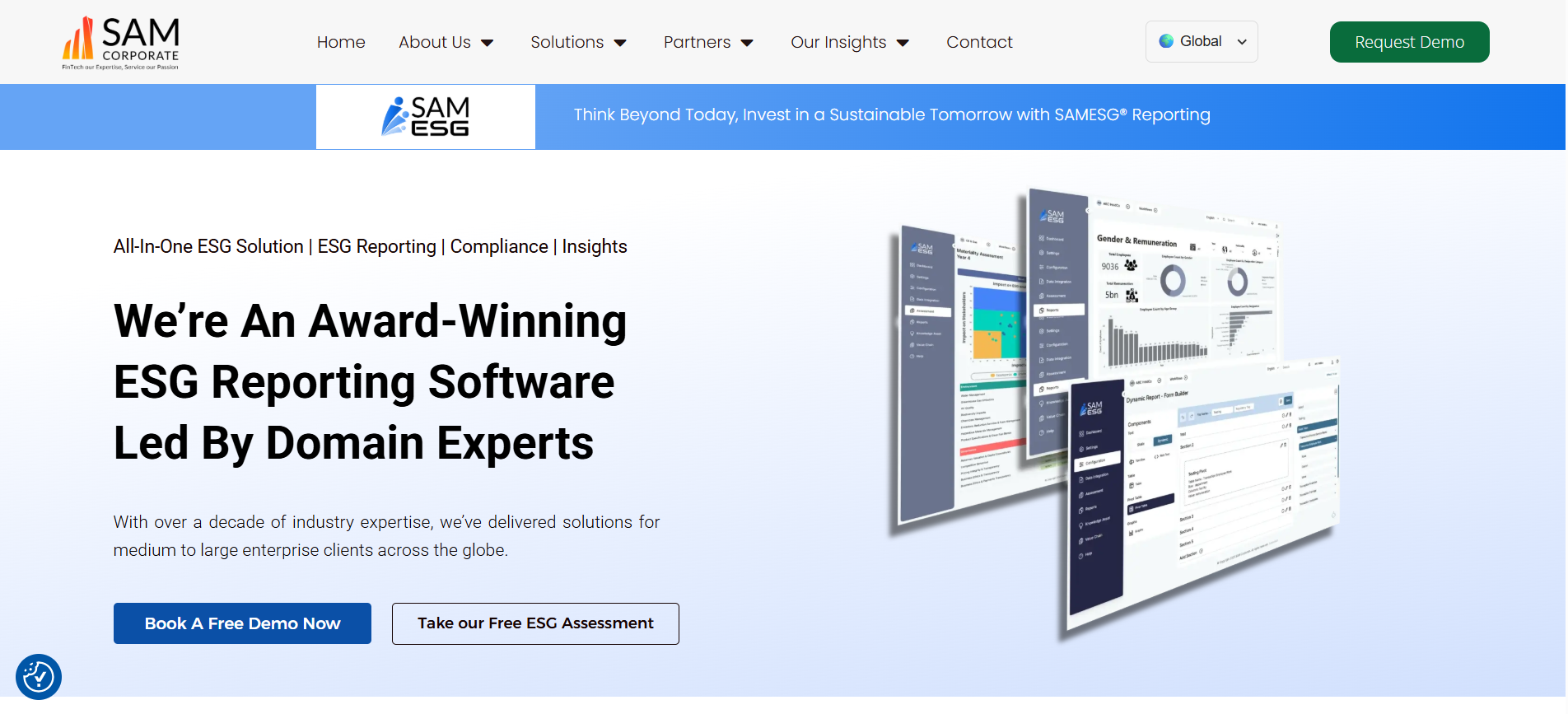
Customizable Reporting and Dashboards: SAM Corporate includes reporting tools and dashboards designed to visualise ESG metrics and sustainability performance. These dashboards can help sustainability teams to monitor ESG performance indicators, review reporting progress, and prepare sustainability disclosures for stakeholders. The reporting layer is designed to support both internal governance and external sustainability reporting.
Data Collection and Collaboration: Preparing ESG reports typically requires information from multiple departments, such as operations, HR, procurement and finance. The software supports structured data collection across internal stakeholders, helping organisations coordinate reporting cycles and maintain consistent documentation for ESG metrics.
Disclosure Preparation and Stakeholder Reporting: The platform supports the preparation of sustainability reports and ESG disclosures used in communications with investors, regulators and other stakeholders. This includes structuring ESG reports aligned with recognised reporting frameworks and facilitating repeatable annual reporting processes.
Plans & Pricing
Pricing for the SAM Corporate ESG reporting platform is not publicly disclosed. Organisations interested in the software are encouraged to request demonstrations or contact the vendor for customised pricing proposals.
This suggests an enterprise licensing model tailored to the size of the organisation and the scope of ESG reporting requirements.
Integrations
Public product documentation provides limited detail on specific system integrations. However, ESG reporting platforms such as SAM Corporate typically support integration with internal enterprise systems and data sources used to collect sustainability metrics.
Possible integration contexts include:
ERP systems for operational data.
HR systems for workforce metrics.
financial reporting systems.
internal sustainability data sources.
The vendor does not publicly list specific native integrations or API documentation on the reviewed pages.
Certifications & Assurance
The vendor does not prominently advertise ESG certification or independent verification of the software platform itself. As with most ESG reporting tools, the platform supports reporting processes but does not replace external assurance or sustainability report verification conducted by auditors.
Expert Voices & Reviews
Independent analyst coverage of SAM Corporate’s ESG reporting platform appears limited in global ESG software rankings and analyst market studies.
The vendor primarily presents the solution through its own corporate website and ESG advisory services. As a result, publicly available third-party reviews, user ratings or analyst evaluations appear limited.
For organisations evaluating ESG software, additional due diligence may involve:
requesting product demonstrations.
reviewing case studies or reference customers.
evaluating reporting framework, mapping and disclosure workflows.
The platform appears positioned primarily as a corporate ESG reporting management tool, rather than a widely benchmarked enterprise ESG platform.
Customers & Use Cases
Typical use cases include:
Preparing annual sustainability reports.
Coordinating ESG data collection across departments.
Aligning corporate disclosures with GRI or SASB frameworks.
Preparing ESG information for investors and stakeholders.
Tracking internal ESG performance indicators.
The platform supports corporate sustainability teams responsible for managing ESG disclosure processes.
Closing Insights
SAM Corporate should be positioned primarily as ESG reporting and disclosure management software. Its value lies in structuring ESG data, coordinating reporting processes and aligning corporate disclosures with recognised sustainability frameworks. The platform does not appear to specialize in carbon accounting, operational sustainability analytics or climate risk modelling. Organizations seeking those capabilities would typically require additional specialised tools.