


Available Life Cycle Assessment (LCA) Features
Missing Life Cycle Assessment (LCA) Features
Pricing
Starting Price
Options
Available Since
Deployment Options
- Web Browser (Cloud - Based)
Good Option For
Deep dive
Core Features
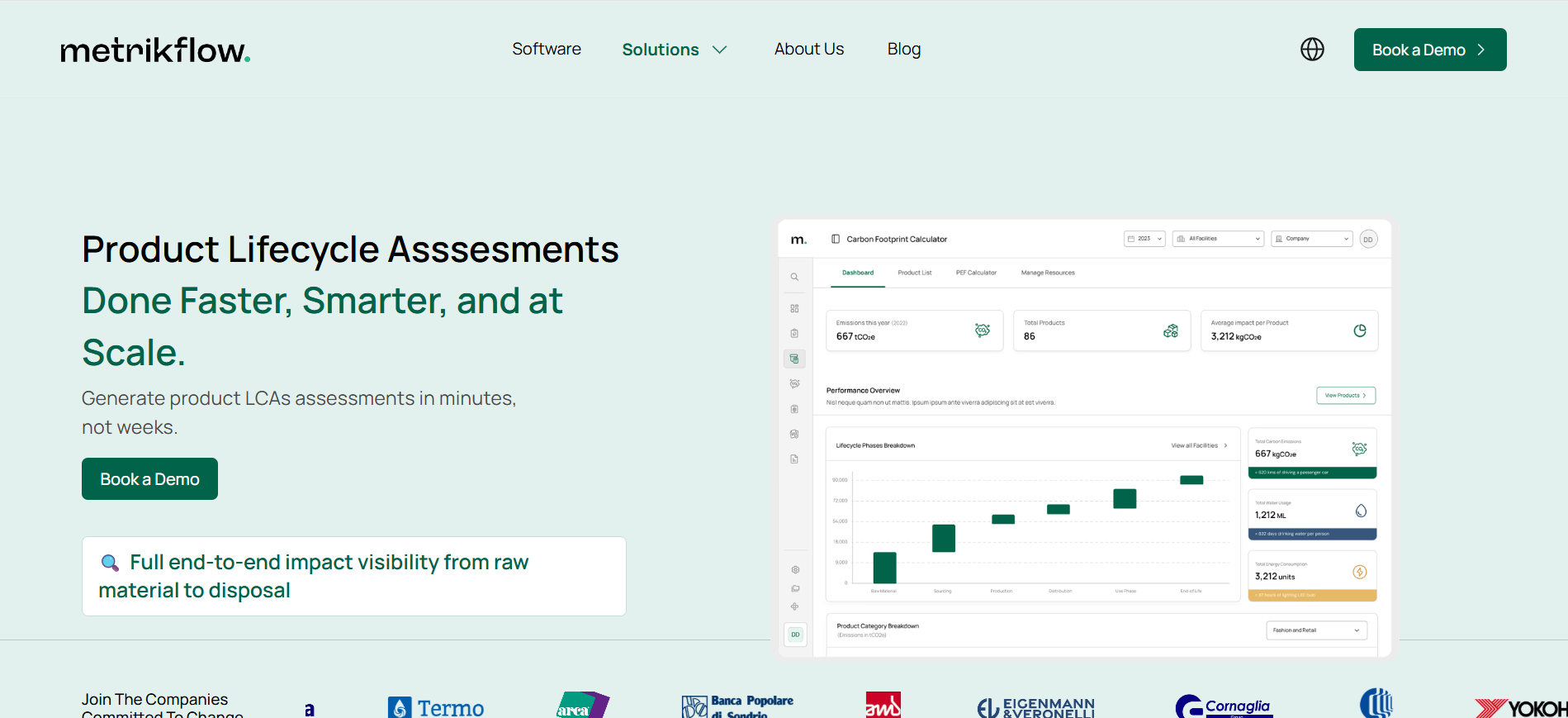
Lifecycle Assessment Modelling: Metrikflow allows organizations to model environmental impacts across the lifecycle of products and industrial processes. Users can define product structures, lifecycle stages and system boundaries in order to calculate environmental impacts associated with each stage. Lifecycle modelling helps identify environmental hotspots and understand how product design decisions affect sustainability outcomes.
Product Carbon Footprint Analysis: The platform supports product carbon footprint calculations that quantify greenhouse gas emissions associated with products across lifecycle stages. These analyses help organisations evaluate climate impacts associated with materials, manufacturing processes and logistics activities.
Environmental Impact Assessment: Metrikflow supports environmental impact analysis across multiple categories, including greenhouse gas emissions, energy use and resource consumption. These assessments help organisations evaluate environmental trade-offs between different product design scenarios.
Lifecycle Data Management: The platform enables organisations to manage lifecycle datasets, including materials, manufacturing processes and supply chain inputs. Managing lifecycle data helps organisations maintain consistency and transparency when performing environmental analyses across product portfolios.
Scenario Analysis for Product Design: Metrikflow enables scenario modelling that allows users to compare alternative product designs or supply chain configurations. By evaluating different scenarios, organisations can identify opportunities to reduce environmental impacts through design improvements.
Sustainability Analytics: The platform provides analytics tools that allow organisations to interpret lifecycle modelling results and understand sustainability performance across products and processes. These analytics support decision-making for product sustainability strategies.
Plans & Pricing
Pricing for Metrikflow is not publicly disclosed. The platform appears to operate under subscription-based enterprise models depending on the scope of lifecycle modelling, number of users and data requirements.
Integrations
Metrikflow integrates lifecycle datasets with product, materials and manufacturing data used for environmental impact modelling. These integrations allow organisations to combine operational product data with environmental impact factors when performing lifecycle assessments and product carbon footprint calculations.
Certifications & Assurance
Lifecycle assessments performed with Metrikflow can support environmental analyses aligned with internationally recognised lifecycle assessment standards. However, formal environmental product declarations or sustainability claims generally require external verification.
Expert Voices & Reviews
Lifecycle assessment platforms like Metrikflow are increasingly used by organisations seeking to understand environmental impacts associated with products and supply chains. These tools enable sustainability teams and product engineers to analyse environmental footprints and integrate sustainability considerations into product development processes.
Compared with corporate carbon accounting platforms, lifecycle assessment software focuses on product-level environmental modelling rather than organisational emissions reporting.
From an NZC editorial perspective, Metrikflow should be considered a lifecycle assessment and sustainability analytics platform designed for product environmental impact analysis.
Customers & Use Cases
Typical use cases include:
product lifecycle assessment.
product carbon footprint analysis.
environmental impact modelling.
sustainability analysis of manufacturing processes.
evaluating alternative product design scenarios.
The platform is particularly useful for organisations seeking to improve sustainability performance through lifecycle modelling and product impact analysis.
Closing Insights
From a Net Zero Compare perspective, Metrikflow should be positioned as a Lifecycle Assessment (LCA) software and sustainability analytics platform. Its primary value lies in enabling organisations to evaluate environmental impacts associated with products and supply chains using lifecycle modelling. These analyses help organisations identify environmental hotspots and design products with improved sustainability performance. Although lifecycle emissions data can contribute to corporate climate strategies, Metrikflow does not function as a corporate carbon accounting system or ESG reporting management platform.