


Available DPP Features
Missing DPP Features
Pricing
Starting Price
Options
Available Since
Deployment Options
- Web Browser (Cloud - Based)
Good Option For
- Small Business (11-50 people)
- Medium Business (51-250 people)
- Large Business (250+ people)
Deep dive
Core Features
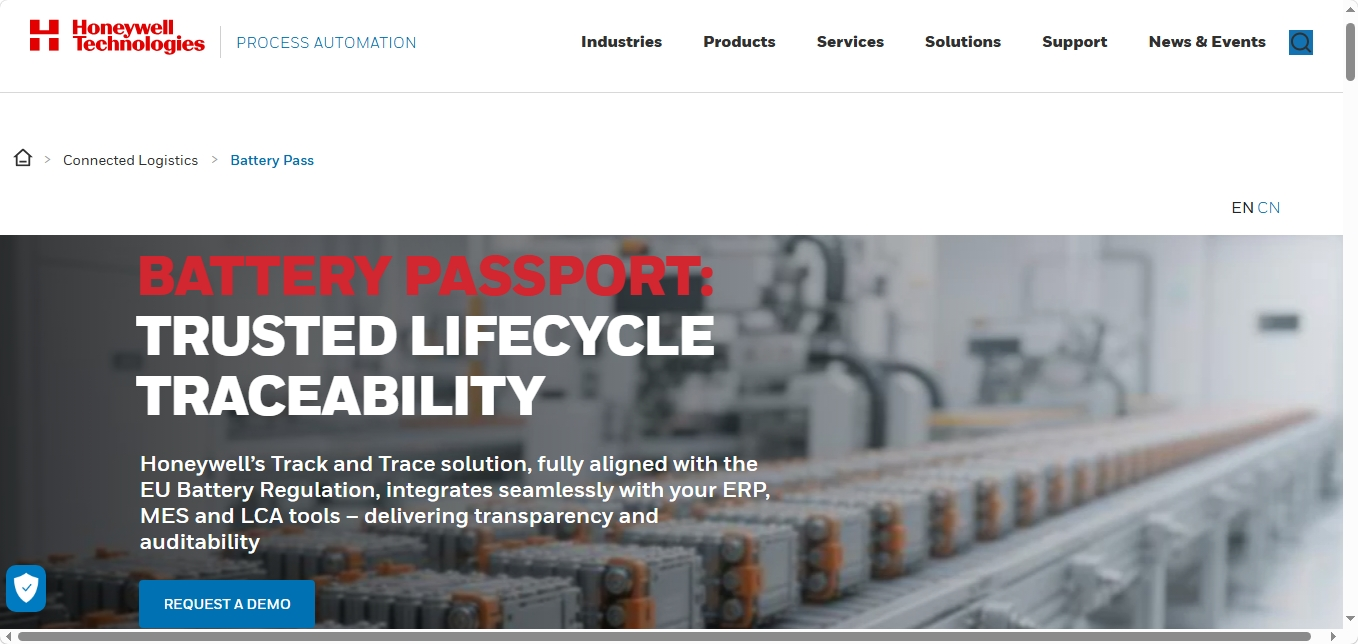
Honeywell Battery Passport builds on the company's Track & Trace technology, combining secure product identification, lifecycle information management and regulatory reporting. The platform is designed to connect manufacturers, suppliers, operators and recyclers while controlling access to commercially sensitive information. Its key features thus include:
Digital Battery Passport Creation: Generates QR-linked digital passports with unique identifiers for individual batteries. Records contain material composition, carbon footprint information, end-of-life information etc.
Supply Chain and Lifecycle Traceability: Tracks battery materials, components and movements across sourcing, production, distribution, use and recycling. Maintains chain-of-custody records for critical minerals such as lithium, cobalt, nickel and graphite, supporting responsible sourcing and due diligence.
Enterprise System Integration: Connects with ERP, manufacturing execution systems (MES), product lifecycle management (PLM) and lifecycle assessment (LCA) tools through standardized APIs.
EU Battery Regulation Compliance Reporting: Structures passport information for requirements under Regulation (EU) 2023/1542. Supports regulator-ready data exports, compliance reporting, validation and integration with EU regulatory systems.
Secure Data Management and Supplier Collaboration: Provides role-based access controls, protected data storage and long-term record retention. Suppliers and other partners can contribute information while manufacturers restrict access to confidential technical and commercial data.
Battery Performance and Circularity Analytics: Consolidates battery performance, degradation, maintenance and state-of-health information to support decisions about reuse, repurposing and recycling.
Closing Insights
Honeywell Battery Passport extends the company's established Track & Trace technology into battery lifecycle management. Honeywell reports that its wider traceability infrastructure processes approximately 15 million messages daily and more than 10 billion unique identifiers annually, serving over 1,500 enterprise customers. The platform is positioned for the EU battery passport requirements taking effect on 18 February 2027. Interested users, particularly large manufacturers requiring enterprise-scale traceability, are invited to contact the company to discuss their implementation needs.