

Available Energy Management Features
Missing Energy Management Features
Pricing
Starting Price
Options
Available Since
Deployment Options
- Web Browser (Cloud - Based)
Good Option For
- Small Business (11-50 people)
- Medium Business (51-250 people)
- Large Business (250+ people)
Deep dive
Core Features
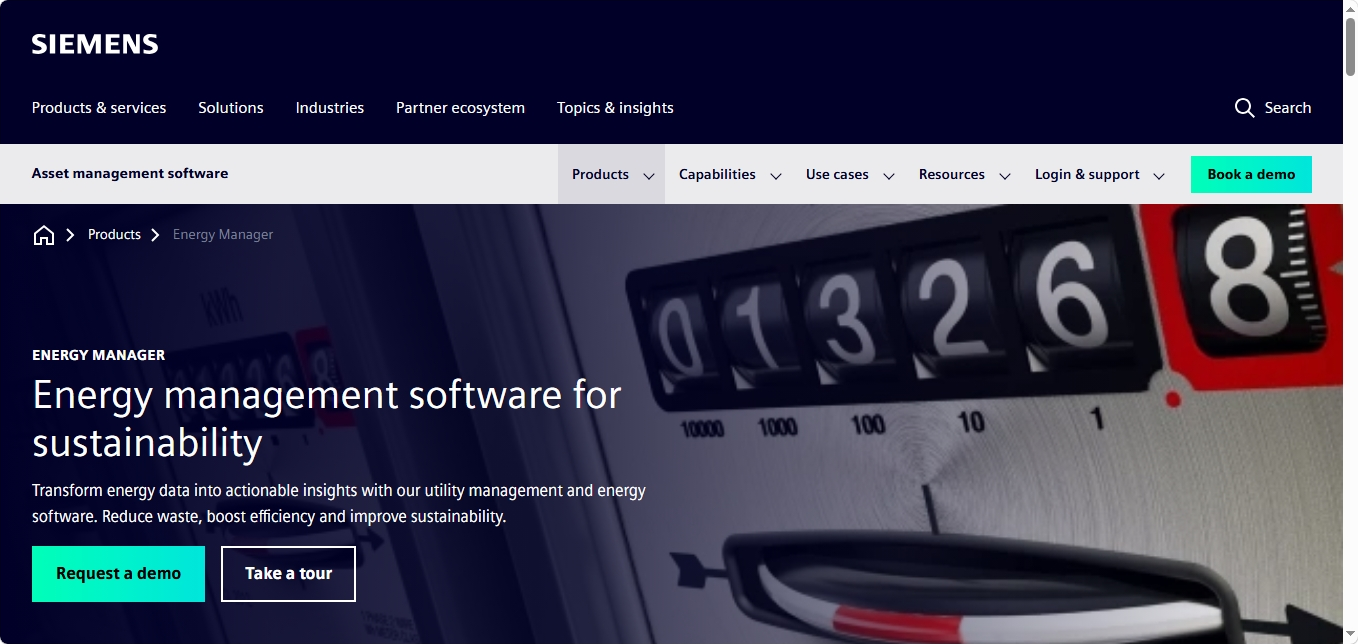
Energy Manager forms part of Siemens' Building X ecosystem, which connects building systems and data through a cloud-based platform. Its capabilities range from real-time monitoring and automated anomaly detection to portfolio benchmarking, energy forecasting and operational emissions analysis. Accordingly, its key features include:
Real-Time Energy Monitoring: Collects electricity, gas, heating, cooling and water consumption data from connected meters and building systems. Users can examine historical and near-real-time trends across individual buildings or entire portfolios.
Submetering and Energy Flow Analysis: Breaks down consumption by campus, building, floor, room or equipment. Sankey diagrams illustrate energy flows, while virtual meters enable calculated consumption values and allocations across departments, tenants and other groups.
AI-Powered Anomaly Detection and Alerts: Uses machine learning to identify unusual consumption patterns. Custom energy rules and notifications help detect problems such as excessive peak demand, HVAC inefficiencies, and unexpected equipment behaviour.
Energy Benchmarking and Performance Indicators: Compares energy performance across buildings and reporting periods. Users can define energy performance indicators, establish baselines and assess efficiency against internal benchmarks and supported external standards, including ENERGY STAR.
Energy Forecasting and Cost Analysis: Uses consumption trends and analytical models to forecast energy demand, examine expenditure and identify potential savings. It also enables weather-normalised comparisons and verification of efficiency improvements.
Emissions Monitoring and Reporting: Calculates operational greenhouse gas emissions associated with monitored consumption. Custom dashboards, scheduled reports and data exports support energy management and sustainability reporting.
Closing Insights
Siemens introduced Building X in 2022 as a cloud-based platform for smart building management. Energy Manager is one of its core applications, alongside Sustainability Manager and Operations Manager. The platform has been deployed across buildings in the University of Wollongong in Australia and in the H Collection's luxury resorts.
Energy Manager is particularly relevant to organisations seeking operational improvements rather than primarily regulatory disclosures. Siemens' separate Sustainability Manager addresses broader decarbonisation planning and compliance reporting. The applications can complement each other within Building X.