


Available Other Features
Missing Other Features
Pricing
Starting Price
Options
Available Since
Deployment Options
Good Option For
- Individuals
- Freelancers (1 person company)
- Microbusiness (2-10 people)
- Small Business (11-50 people)
- Medium Business (51-250 people)
- Large Business (250+ people)
Deep dive
Core Features
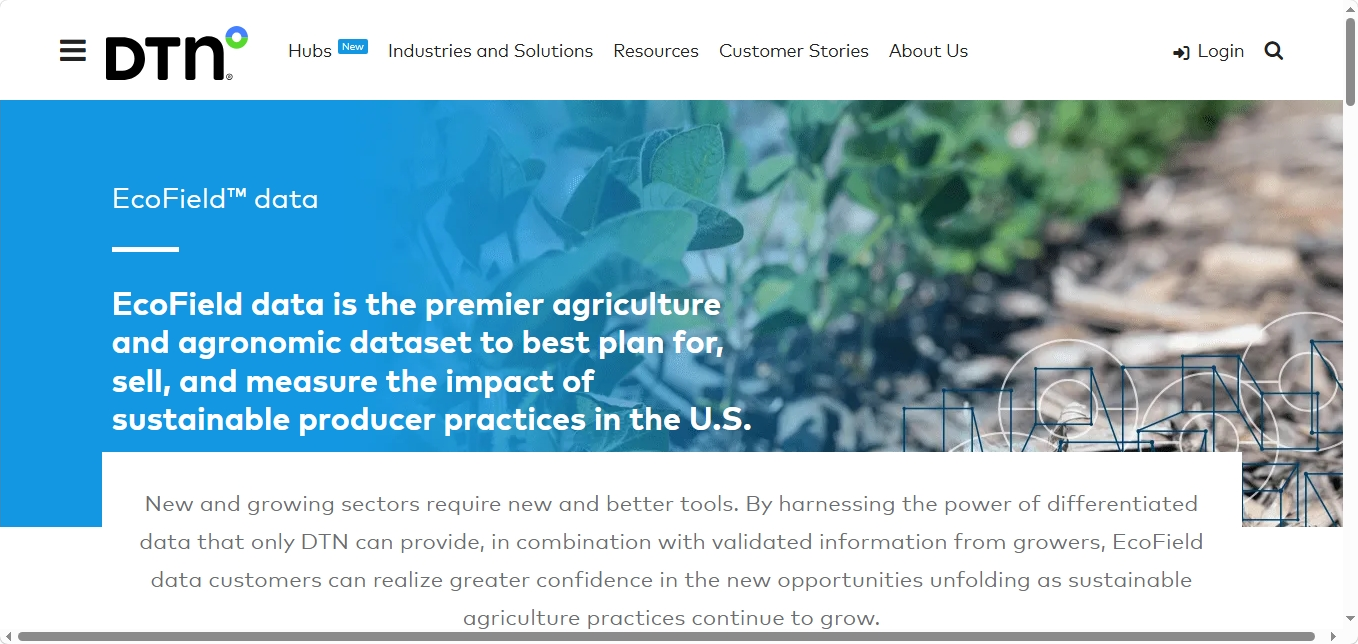
EcoField uses a hybrid data methodology combining satellite imagery, agricultural surveys, farm-level information, statistical estimation, and environmental impact models. It derives field-level results from agricultural practices and modelled activity data, including information that cannot be directly observed through remote sensing. Its main features include:
Field-Level Agricultural Coverage: Provides sustainability information for 19 grain and pasture types across 34 U.S. states, covering crops such as corn, soybeans, cotton, and wheat.
Sustainable Farming Practice Indicators: Tracks more than 50 indicators, including fertilizer types, irrigation, tillage, crop protection products, soil characteristics, and agricultural machinery use.
Carbon Footprint and Sequestration Modelling: Uses environmental impact models to estimate field-level greenhouse gas emissions and assess the carbon impacts of agricultural practices.
Scope 3 Supply Chain Assessment: Provides emissions information associated with agricultural production, helping food manufacturers, grain traders, and other businesses assess purchased crop emissions and support supply chain reporting.
Sustainable Grower Identification: Helps agricultural retailers and commodity buyers identify growers and fields associated with specific crops, farming practices, and environmental performance characteristics, supporting targeted sourcing and supplier engagement.
Closing Insights
DTN introduced EcoField in 2023 to address growing demand for agricultural sustainability data. The dataset draws on DTN's existing agricultural intelligence, including FarmMarket information, alongside satellite observations and farmer surveys. Its methodology incorporates established environmental models rather than depending exclusively on self-reported farm emissions.
EcoField is commercially available through DTN, with pricing provided on request. Its geographical focus remains the United States, making it particularly relevant to organizations sourcing American agricultural commodities. Prospective users should distinguish its modelled emissions estimates from direct measurements and confirm whether its methodology meets their specific reporting or verification requirements.