


Available DPP Features
Missing DPP Features
Pricing
Starting Price
Options
- Free
- Monthly Subscription
Available Since
Deployment Options
- Web Browser (Cloud - Based)
Good Option For
- Small Business (11-50 people)
- Medium Business (51-250 people)
- Large Business (250+ people)
Deep dive
Core Features
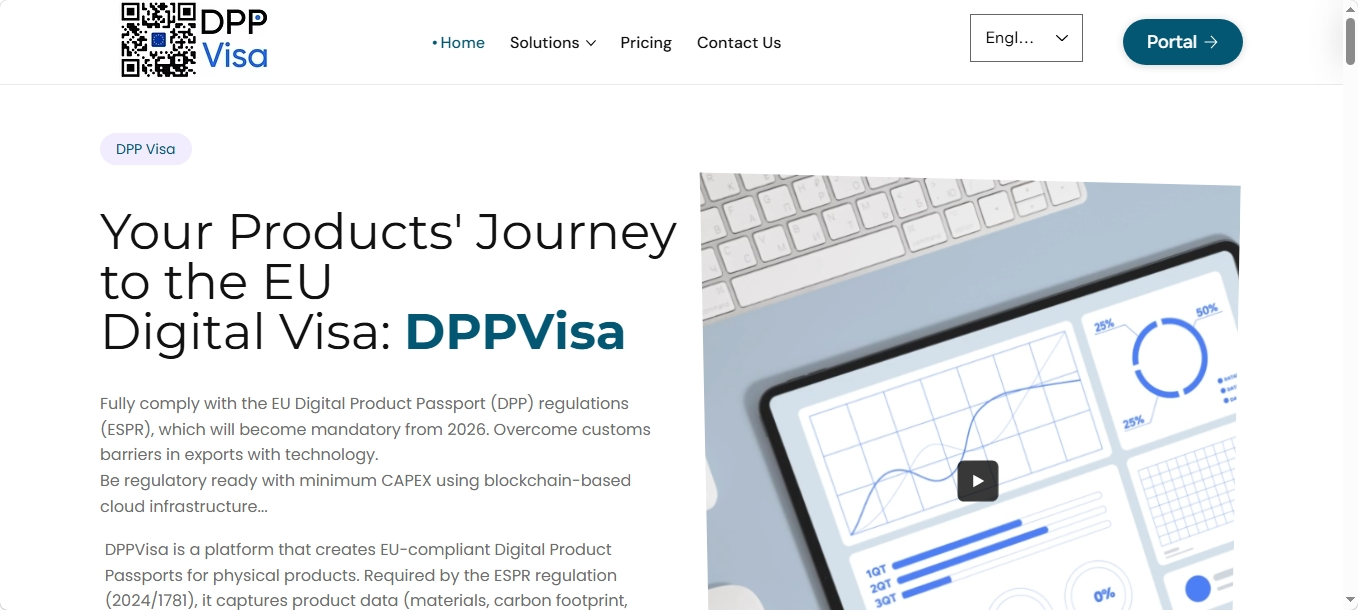
DPPVisa is designed to digitise and publish product-level information through QR-linked Digital Product Passports aligned with ESPR requirements. According to the company, some of its main features are:
QR-Linked Product Passports — Generates product-specific QR codes that connect users directly to web-based digital passport pages containing product and sustainability information.
Blockchain-Based Verification — Uses blockchain infrastructure to create immutable product records and support transparent verification of passport data.
ERP and MES Integration — Supports integration with ERP and MES systems to connect operational manufacturing data with DPP workflows.
Automated Regulatory Reporting — Includes tools for generating reports intended for submission to regulatory authorities.
Textile and Automotive DPP Templates — Provides sector-specific passport structures for industries including textiles, apparel, EV batteries, and automotive manufacturing.
Certificate and Document Management — Centralises product certificates, technical documents, and compliance-related records within a single digital environment.
Closing Insights
DPPVisa is a spin-off initiative of Otokod Technologies, an Istanbul-based company established in 1990 with experience in barcode systems, RFID infrastructure, and industrial traceability technologies. The platform emerges at a time when Turkish manufacturers, particularly in textiles and apparel, are facing growing pressure to adapt to EU sustainability, due-diligence, and digital-product requirements tied to continued access to European markets. Recent industry discussions in Türkiye have increasingly focused on digital transformation, product traceability, and compliance infrastructure linked to the EU Green Deal and Digital Product Passport requirements.
The platform’s industry connections are also notable. DPPVisa lists GS1 Türkiye, Zebra Technologies, and the EU-funded CIRPASS-2 initiative among its solution partners. These associations situate the platform within wider discussions around global product-identification standards, industrial traceability infrastructure, and emerging European DPP interoperability frameworks. CIRPASS-2 in particular is connected to ongoing EU work around Digital Product Passport standardisation and deployment models.
DPPVisa currently offers Free, SME, Pro, and Enterprise subscription tiers catering to both smaller exporters and larger industrial organisations. The SME plan uses a pay-per-use structure starting at €3 per DPP, while the €59 Pro tier is positioned toward SMEs seeking to secure product data or expand into foreign markets. Enterprise deployments are described as suitable for organisations requiring automated data flows and large-scale production support.