


Available DPP Features
Missing DPP Features
Pricing
Starting Price
Options
Available Since
Deployment Options
- Web Browser (Cloud - Based)
Good Option For
- Small Business (11-50 people)
- Medium Business (51-250 people)
- Large Business (250+ people)
Deep dive
Core Features
Deply supports sustainability compliance through a combination of product information management, supplier collaboration, and traceability infrastructure. Its main features include:
Digital Product Passport Generation — Enables companies to generate DPPs for products and packaging using centralized lifecycle and sourcing data.
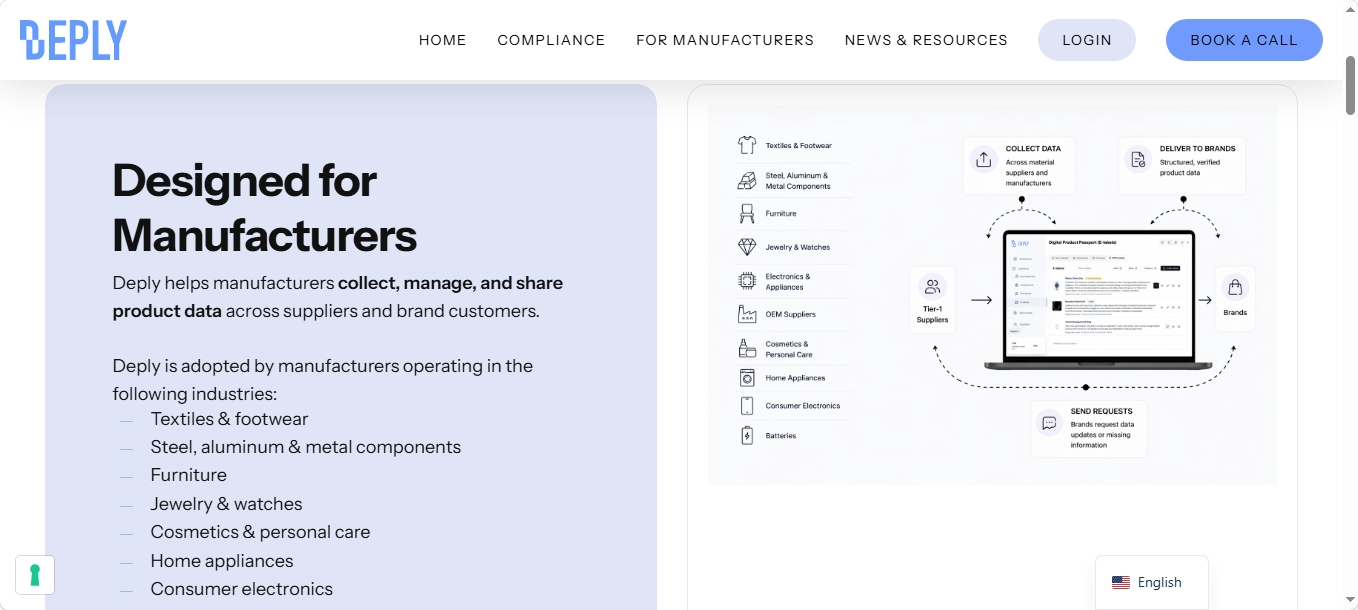
Multi-Tier Supply Chain Traceability — Supports traceability from raw materials through finished products by connecting Tier 1, Tier 2, and Tier 3 suppliers within a shared platform.
Collaborative Supplier Portal — Allows suppliers and internal teams to jointly input product, component, packaging, and sourcing information.
Lifecycle & Sustainability Data Management — Tracks environmental impact and lifecycle assessment (LCA) information associated with products and materials.
Blockchain-Verified Traceability — Uses blockchain-backed verification for provenance and product journey data.
Regulatory Compliance Support — Helps organizations prepare for regulations including ESPR, CSRD, and environmental labeling obligations
Closing Insights
Deply’s more interesting angle is not simply that it generates Digital Product Passports, but that it treats supplier participation as the central problem behind DPP readiness. Much of the platform’s workflow is built around replacing fragmented exchanges of spreadsheets, emails, certifications, and sustainability questionnaires with a shared supplier environment where product and sourcing information can be collected collaboratively across multiple supply-chain tiers.
That focus reflects a practical issue emerging around EU sustainability regulation: many manufacturers already possess some product data inside ERP or PLM systems, but the missing information often sits upstream with suppliers, subcontractors, and raw-material providers. Deply repeatedly emphasizes supplier onboarding, collaborative data entry, and certification collection rather than presenting DPPs as standalone compliance documents.
Another notable detail is the company’s attention to customer-facing transparency. Deply’s DPPs are intended not only for regulators, but also for consumers scanning products to view sourcing history, environmental metrics, and provenance information. The platform has also explored blockchain-backed traceability in sectors such as wine and luxury goods, where authenticity and anti-counterfeiting concerns overlap with sustainability reporting.
Rather than targeting a single industry, Deply appears to be concentrating on sectors where provenance already influences purchasing decisions — including watches, jewelry, fashion, wine, and premium consumer goods.