

Available ESG Monitoring Features
Missing ESG Monitoring Features
Pricing
Starting Price
Options
- Free Trial
- Annual Subscription
Available Since
Deployment Options
- Web Browser (Cloud - Based)
Good Option For
- Medium Business (51-250 people)
- Large Business (250+ people)
Deep dive
Core Features
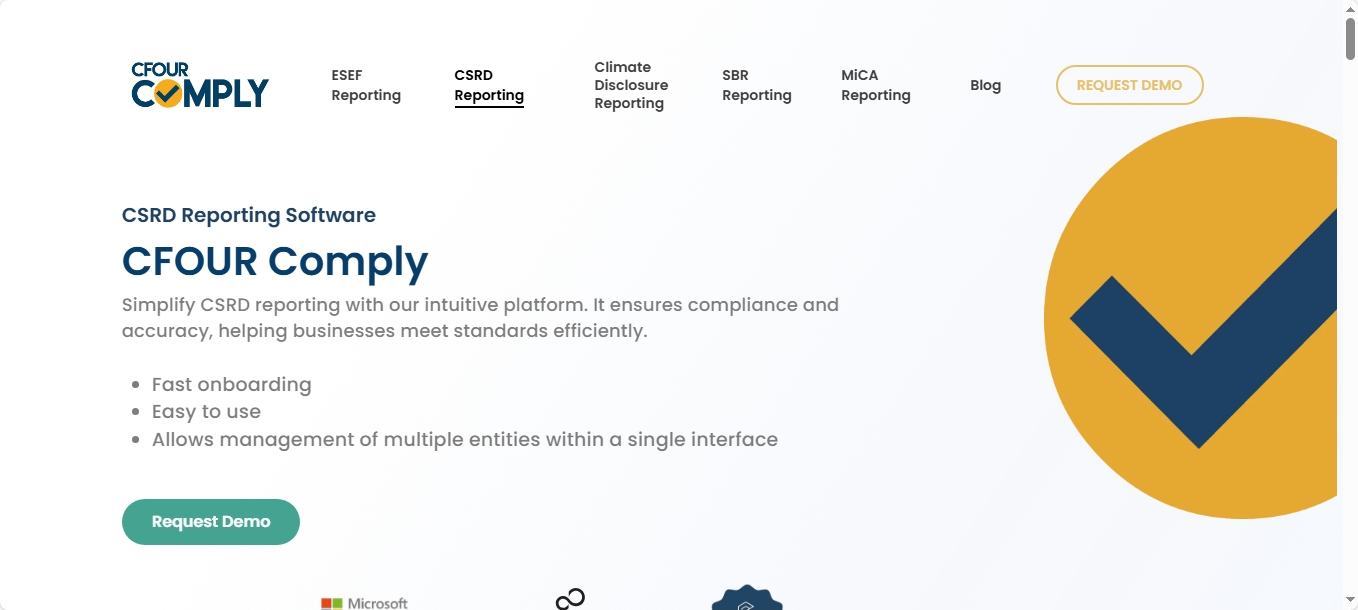
The CFOUR Comply is designed to transform existing documents—typically annual reports in PDF format—into machine-readable XHTML files. The platform is taxonomy-driven, meaning it relies on official XBRL taxonomies, such as the ESRS set for sustainability, to guide the tagging process. Its main capabilities include:
AI-Powered Tagging Assistance: Leverages TAGSENSE GenAI technology to intelligently suggest XBRL tags for financial and sustainability statements, reducing manual effort.
Multi-Regulatory Taxonomy Support: Pre-loaded with the latest taxonomies for CSRD (ESRS) and national regulations, allowing users to generate filings for multiple jurisdictions from a single interface.
Roll-Forward Tagging: Enables users to apply tagging structures from a previous year’s submission to a new report, ensuring consistency and saving significant time during each reporting cycle.
Collaborative Auditor Review: Provides specific permissions and access controls that allow external auditors to review the tagged XBRL files within the platform before final submission.
PDF to XHTML Conversion: Converts professionally designed annual reports into XHTML format while preserving complex graphics, fonts, and overall design integrity, which is a prerequisite for iXBRL creation.
Compliant Validation: Utilises the certified FUJITSU Interstage XWand processor to validate files against official ESEF and ESRS rulesets, guaranteeing regulator-ready output.
Closing Insights
CFOUR Comply is developed by Eunoia Limited, a cloud-first data analytics company based in Malta. Whereas many platforms have origins in broader environmental, social, and governance (ESG) consulting, Eunoia’s background is in business intelligence and data orchestration. This background informs the platform’s design approach to regulatory text as a data processing task. The company's focus on technical implementation is illustrated by its early adoption of the draft ESRS taxonomy in 2024, which preceded mandatory deadlines and aims to keep users aligned with evolving European Financial Reporting Advisory Group (EFRAG) standards.
What distinguishes it from broader carbon accounting tools is its exclusive focus on the intersection of sustainability and financial reporting—specifically the XBRL mandate of CSRD. It does not calculate carbon footprints; instead, it ensures that whatever data a company has prepared can be submitted in a format the regulators will accept. The platform has gained traction with firms like Logicom and M&Z, who cite its user-friendliness and responsive support during peak filing seasons. As the regulatory scope narrows under the Omnibus proposal—now targeting firms with over 1,000 employees—CFOUR Comply is best suited for these large entities and the consultancy firms serving them, who need a scalable, multi-client solution to manage the technical burden of the new tagging requirements.