



Available Carbon Accounting Features
Missing Carbon Accounting Features
Pricing
Starting Price
Options
- Free Trial
- Annual Subscription
Available Since
Deployment Options
- Web Browser (Cloud - Based)
Good Option For
- Freelancers (1 person company)
- Microbusiness (2-10 people)
- Small Business (11-50 people)
- Medium Business (51-250 people)
- Large Business (250+ people)
Deep dive
Core Features
Carbo is structured as a “climate suite” that connects emissions measurement, reduction planning, and stakeholder engagement in a single workflow. Its approach combines semi-automated data collection, standardised carbon methodologies, and embedded guidance to make carbon accounting accessible while maintaining methodological consistency. Some of its core features include:
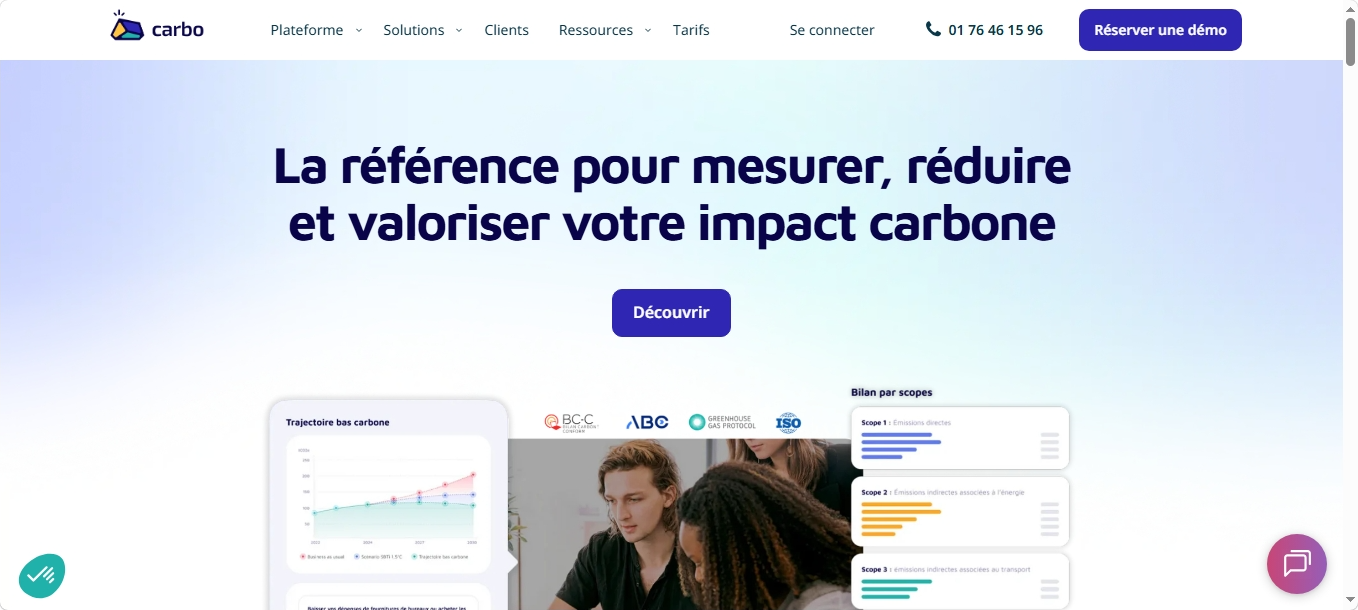
Bilan Carbone® Calculation (Scope 1–3) – Provides a complete carbon footprint aligned with ADEME methodology, using certified calculations and multiple reference databases.
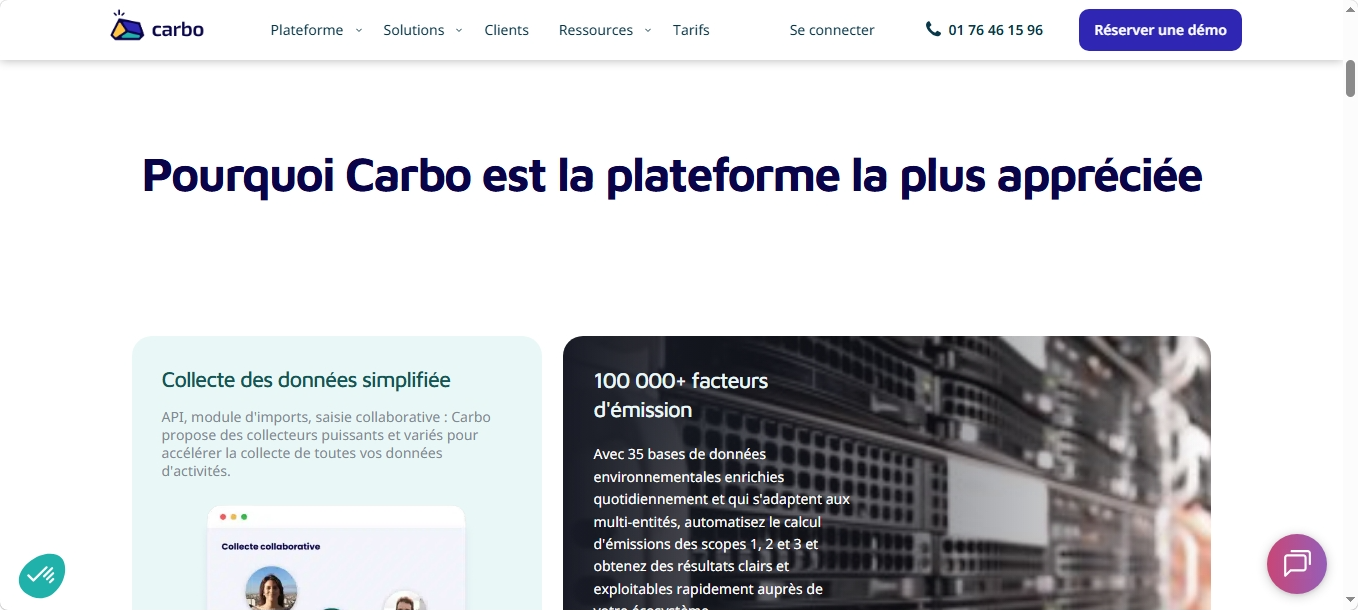
Semi-Automated Data Collection – Combines manual input, collaborative data entry, and file imports, with pre-filled datasets to reduce collection time and improve consistency.
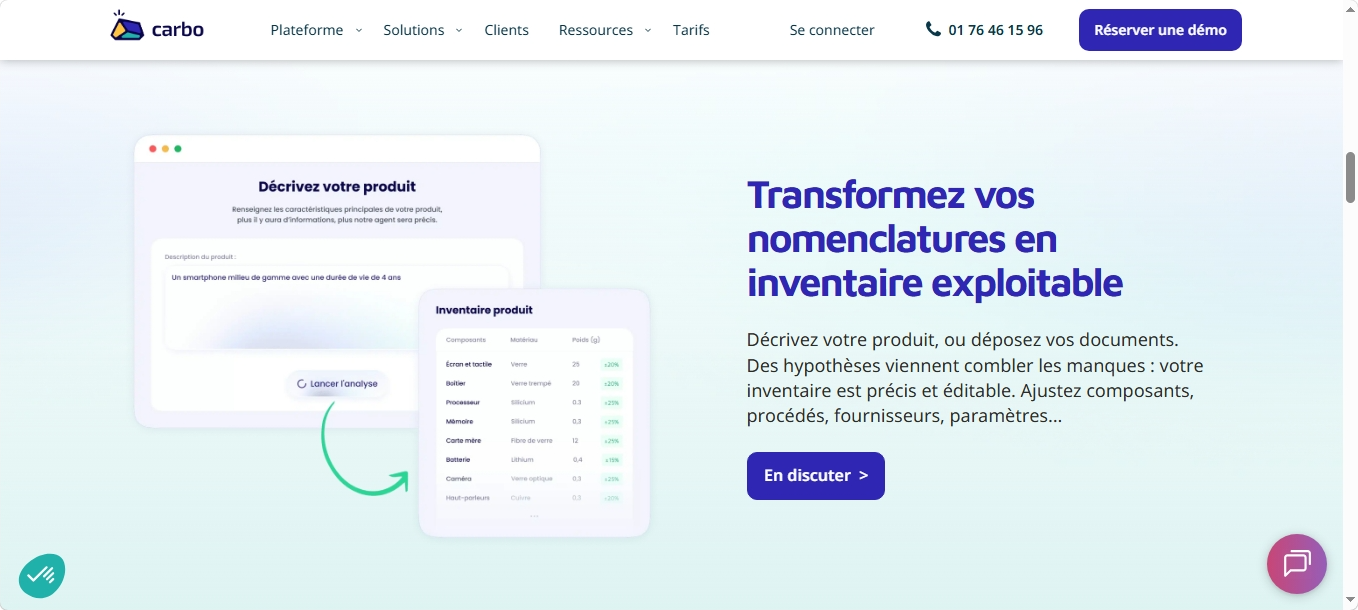
Lifecycle Analysis (LCA) Module – Enables product-level carbon assessments, allowing organisations to move from organisational footprinting to eco-design and product comparison.
Decarbonisation Trajectory & Action Plans – Allows users to model emissions scenarios, define reduction targets, and build measurable action plans aligned with frameworks such as SBTi.
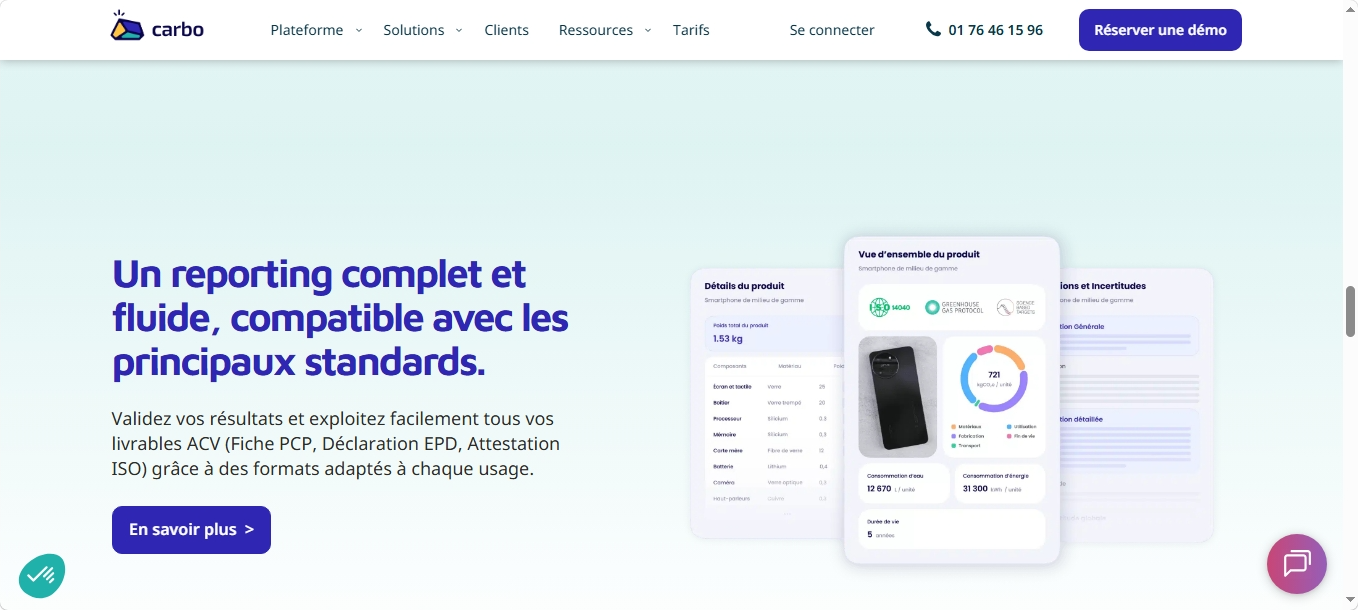
Dashboards, Reporting & Communication Tools – Generates interactive results, exportable reports, and communication materials to support transparency, stakeholder engagement, and certification processes.
Training & Engagement (Carbo Academy) – Provides educational resources, internal awareness tools, and structured guidance to help teams understand and act on carbon data.
Closing Insights
Carbo was launched in 2019 by Simon Létourneau, Emmanuel Watrinet, and Julien Janson, who brought together experience in energy markets, product development, and startup operations to build a carbon footprint platform. The platform is used by a range of organisations, including clients of La Banque Postale and companies such as Alan, Merci Handy, and others, illustrating its relevance across sectors and company sizes.
Recent developments include the introduction of AI-assisted lifecycle analysis and continued expansion of its data resources and training ecosystem, reinforcing its positioning as both a software and educational platform. The Carbo platform's alignment with the Bilan Carbone® methodology makes it particularly relevant for organisations operating in the French market, where carbon reporting practices are closely tied to Bilan Carbone and related regulatory frameworks such as BEGES.