


Available DPP Features
Missing DPP Features
Pricing
Starting Price
Options
- Free
- Monthly Subscription
- Pay-As-You-Go
Available Since
Deployment Options
- Web Browser (Cloud - Based)
Good Option For
- Small Business (11-50 people)
- Medium Business (51-250 people)
Deep dive
Core Features
Digital Product Passport Generation
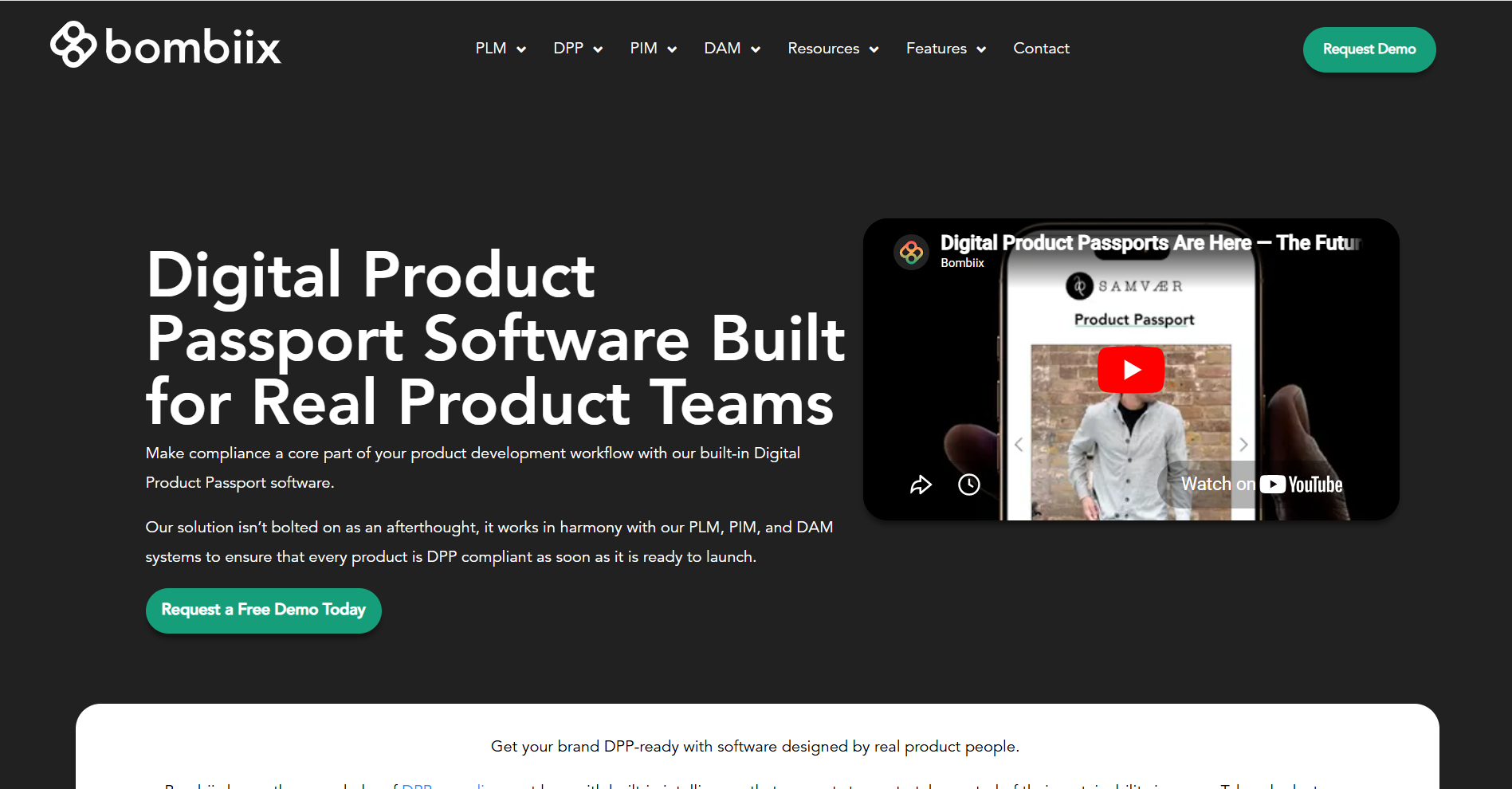
Bombiix generates Digital Product Passports directly from the product development workflow. This is the platform’s core sustainability and compliance feature. DPP creation is not treated as a separate task after product launch. Instead, the passport is built alongside the product as materials, specifications, supplier data, and compliance information are created.
SKU-Level Product Passports
Bombiix can generate a separate DPP for each SKU, including product variants such as colour, material and size. This is important because DPP requirements often need product-level or variant-level granularity rather than generic brand-level information.
PLM-Native Product Data
The platform’s main strength is that DPP data comes from the PLM workflow. Product specifications, BOMs, supplier data, and sustainability information are managed during product development and can flow into the DPP.
This reduces the risk of data drift between source data and the passport.
Supplier Data Ingestion
Bombiix supports supplier data ingestion through API, CSV upload, supplier portal tasks, and database integrations. This makes it easier to collect the material and product data required for DPPs without relying only on email or manual spreadsheet workflows.
Compliance Reporting and Audit Trails
The platform supports automated compliance reporting and maintains audit trails for regulatory compliance. This is relevant for EU DPP readiness and should be marked as compliance reporting and audit support.
Living Product Records
Bombiix treats DPPs as living documents. If regulatory requirements change or product information is updated, data can be changed in the PLM and DPPs can be updated across the product range.
PIM and DAM Integration
Because Bombiix includes PIM and DAM capabilities within the wider platform, product information and digital assets can be connected to DPP workflows. This supports customer-facing DPP pages, documentation, product content and digital asset linking.
Custom Workflows and Data Fields
Bombiix allows custom data fields, approval processes and DPP pages. This is useful for brands with specific product workflows, internal terminology or compliance requirements.
Enterprise System Integration
Bombiix integrates with ERP and CAD tools via standard APIs, and can support more complex integrations if required. This makes it suitable for product teams that already use enterprise or design systems.
Plans & Pricing
Bombiix offers a free tier for small businesses with up to 15 products and basic PLM functionality. Paid subscriptions follow a per-user, per-month model and include PLM, PIM, DAM, and DPP functionality. There are no onboarding or installation fees, and standard API integrations are included, although complex or bespoke integrations may incur additional one-off costs.
Integrations
Bombiix integrates with existing ERP, CAD, and communication tools. It also supports supplier data ingestion through API, CSV uploads, supplier portals, and database connections. Standard API integrations are included in the subscription, while more complex API connections or bespoke integrations may require additional one-off costs.
Relevant integration categories include:
ERP systems.
CAD tools.
supplier systems.
databases.
CSV uploads.
API integrations.
PIM workflows.
DAM workflows.
PLM workflows.
communication tools.
Certifications & Awards
No specific certifications or awards are publicly disclosed for Bombiix DPP on the reviewed product page. The platform states that it uses AWS hosting, encryption, access controls, and proactive monitoring, but these references relate to platform security practices and should not be interpreted as product-level environmental certification or third-party sustainability assurance.
Expert Voices & Market Position
Bombiix occupies a useful niche in the DPP market: PLM-native Digital Product Passport software for product teams.
Compared with adjacent platforms:
PSQR is stronger for EPCIS event traceability and regulated supply chains.
Arianee is stronger for enterprise DPP infrastructure and connected product identity.
Kezzler is stronger for product serialization, connected products and smart packaging.
TrusTrace is stronger for deep textile supply chain traceability.
Bombiix is strongest where a product team wants PLM, PIM, DAM and DPP together in one workflow.
Within the Net Zero Compare taxonomy, Bombiix DPP should be positioned as:
Digital Product Passport Software.
Product Lifecycle Management Software.
Product Compliance Software.
Product Information Management Software.
Supply Chain Sustainability Software.
Digital Asset Management Software, secondary only.
Bombiix is not the deepest traceability infrastructure platform, but it is highly relevant for brands that need to make DPP readiness operational inside their product development workflow.
Customers & Use Cases
Bombiix is designed for product teams, especially SMEs and brands that need to manage product development, product information, digital assets, and DPP readiness in one platform.
Typical customers include:
fashion brands.
apparel companies.
consumer goods brands.
product development teams.
SMEs preparing for EU DPP requirements.
companies using spreadsheets for PLM and compliance.
brands needing SKU-level DPPs.
companies collecting supplier material data.
companies wanting PLM, PIM, DAM and DPP in one platform.
Public customer logos and references on the DPP page include Joanie, Fazane, Smiffys, Christys, Global Solutions for Clothing, Pretend to Bee, Active Learning, Rekucci and Rubies.
Typical use cases include:
creating Digital Product Passports.
generating SKU-level DPPs.
managing BOMs and product specifications.
collecting supplier data.
uploading bulk product or supplier data.
connecting PLM data to DPP outputs.
linking product information and digital assets.
maintaining DPP audit trails.
updating DPPs when product or regulatory requirements change.
integrating with ERP and CAD tools.
preparing product teams for EU DPP requirements.
Closing Insights
Bombiix DPP should be understood as a product-team-first Digital Product Passport solution. Its key advantage is that DPP data is created and maintained inside the same system used for product development, product information, and digital assets.
This makes it a strong fit for SMEs and fashion or consumer goods brands that want to avoid fragmented DPP workflows. The platform reduces the need to rebuild passport data manually after product development because supplier data, product data, sustainability information, and documentation can flow into the DPP from the wider Bombiix platform.