

Summary
Details
- Australia
WELS is mandatory for regulated products supplied or sold in Australia.
Mandatory obligations include:
Product registration.
Testing and rating under applicable standards.
Correct water rating label.
Current label display.
Correct advertising information.
Compliance with regulated product requirements.
Deep dive
- What’s Required
- 1. Determine whether the product is regulated
- 2. Register the product
- 3. Test and rate the product
- 4. Display the correct water rating label
- 5. Maintain compliance
- Important Deadlines
- Current Status
- Penalties for Non-Compliance
- 1. Product sale restriction
- 2. Compliance action
- 3. Corrective labeling
- 4. Market disruption
- 5. Reputational and buyer risk
- Examples of Known Violations / Failure Modes
- Resources
📩 Stay ahead of climate regulation and reporting shifts
Regulatory updates, reporting standards, and new climate software — distilled into one concise weekly brief for decision-makers.
Thanks for signing up. Please check your inbox to confirm your subscription.
Practical updates. Once per week.
What’s Required
1. Determine whether the product is regulated
WELS applies to specified water-use and water-saving products. Official guidance lists regulated product categories including taps, showers, clothes washing machines, dishwashers, toilets, urinals and flow controllers.
2. Register the product
All regulated products must be registered before they are supplied or sold in Australia. The public register distinguishes products whose registration is current and available for sale in Australia.
3. Test and rate the product
Water efficiency standards detail the criteria for testing, rating and labelling regulated products. Product testing, rating, labelling and display requirements are detailed in Australian/New Zealand Standard 6400:2016 Water efficient products, Rating and labelling.
4. Display the correct water rating label
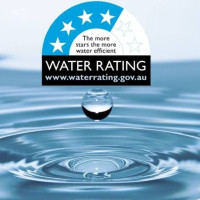
When supplying or selling regulated products, companies must follow specific labelling requirements for products, packaging and advertising. The WELS label must be current.
The label includes:
Star rating.
Water consumption or flow information.
Product registration details.
Correct label format.
Display requirements for sale and advertising.
5. Maintain compliance
Suppliers must ensure product information, registration, label display, and advertising remain accurate.
Businesses should monitor:
Product changes.
Registration status.
Model numbers.
Label display.
Online advertising.
Packaging changes.
Current WELS standard requirements.
Important Deadlines
WELS is mandatory for regulated products in Australia.
Important timing points:
WELS was introduced in 2005 as Australia’s mandatory water-saving program.
Regulated products must be registered and correctly labelled before supply or sale in Australia.
Testing, rating, labelling and display requirements are detailed in AS/NZS 6400:2016.
Businesses should monitor current registration and labelling rules, especially for online sales and advertising.
Current Status
WELS is active and mandatory in Australia. Official guidance describes WELS as an Australian government initiative in partnership with state and territory governments, and the scheme is used to help consumers compare the water efficiency of regulated products.
Current status:
Active mandatory Australian scheme.
Covers regulated water-using products.
Requires registration and labelling.
Uses star ratings.
Technical requirements under AS/NZS 6400:2016.
Linked to Australia and New Zealand technical standards.
Relevant to manufacturers, importers, retailers, builders and consumers.
Penalties for Non-Compliance
Because WELS is statutory, non-compliance can trigger regulatory enforcement.
Possible consequences include:
1. Product sale restriction
Products may not be legally supplied or sold if they are regulated but not registered and correctly labelled.
2. Compliance action
The WELS regulator may take compliance and enforcement action under the WELS framework.
3. Corrective labeling
Businesses may need to correct product labels, packaging or advertising.
4. Market disruption
Non-compliant products may be removed from sale or delayed.
5. Reputational and buyer risk
Retailers, builders and consumers may lose trust in incorrect water-efficiency claims.
Examples of Known Violations / Failure Modes
Typical failure modes include:
Selling a regulated product without registration.
Using an outdated WELS label.
Incorrect star rating.
Incorrect water consumption information.
Advertising without required WELS information.
Treating WELS as voluntary for regulated products.
Not updating labels after product changes.
Misunderstanding exemptions.
Confusing WELS with WaterSense.
Selling imported products without Australian registration.
Assuming New Zealand technical information automatically satisfies Australian registration.
Resources

Cut through the green tape
We don't push agendas. At Net Zero Compare, we cut through the hype and fear to deliver the straightforward facts you need for making informed decisions on green products and services. Whether motivated by compliance, customer demands, or a real passion for the environment, you’re welcome here. We provide reliable information. Why you seek it is not our concern.